

“Cohousing is an intentional community, formed by people who decide to live in the same physical environment, in which the land, buildings and other existing benefactories constitute means of integration and coexistence among all residents, allowing and promoting an intense community life, but without preventing each householder from having a private family life.” Charles Durrett
Most likely, you've seen a cohousing in some classic American movie.
They were created with a focus on an incredible and revolutionary concept of sharing and attitudes. sustainableMany still don't know this model, let alone its advantages, but don't think that means they're under-seen or sought by tenants.
In fact, several studies have proved this tendency!
As an example, there is a study by the Credit Protection Service (SPC Brasil) and the National Confederation of Shoppers (CNDL) on co-consumption in the country.
In it, about 63% of Brazilians have already reported having lived in a cohousing or even, who could easily adapt to this lifestyle. After all, their residents easily see the incredible advantages of these environments.
They involve not only social issues, but also economic and environmental - concepts that have been gaining a huge increase in discussion and concern around the world!
How about getting to know a little more about these houses and their benefits? Follow us in this text and discover all about cohousing, how it works and some of the greatest examples of these houses in Brazil.
See the topics that will be addressed:
- What's cohousing?
- What are the advantages and disadvantages of living in a cohousing?
- Is Cohousing the same thing as collieving?
- What are the cohousings in Brazil?
- You got cohousing in São Paulo?
- Most famous cohousings in the world.
Let's get started!
What's cohousing?
Cohousing is a very similar shared housing model and even confused with the colivingHowever, it has quite evident differences.
It is very similar to a small private village, formed by houses similar to each other. In the same land or area, each resident has his own residence, but shares all the internal or external spaces of the site.
This includes laundry and kitchen, garden, leisure areas and many others.
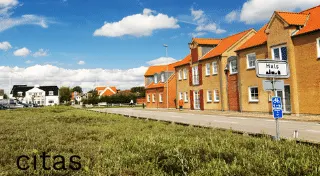
Cohousing came into being in Denmark in the 1960s. But today, it has spread and is already seen in several countries, always aiming at this collaborative and healthy lifestyle. If we had to summarize its main characteristics, these would be the main:
- Architecture: the houses are built thinking of providing a greater proximity between people. Normally, a cohoising village has between 20 and 40 houses, facing each other and without walls separating them;
- Own house: each resident has his own home;
- Joint life: all other tasks such as cooking and washing clothes, or even leisure activities are performed in shared spaces of the land.
- Environment: cohousing is concerned with sustainability, which is why it encourages this practice among its residents - by the use of bicycles, preference for collective transport, among many other actions.
What are the advantages and disadvantages of living in a cohousing?
Like any housing model, cohousing has its advantages and disadvantages. Not everyone can adapt to this style, you need to be completely in accordance with its principles and open-minded.
So we separate below the main advantages and disadvantages so you can analyze carefully before moving. See:
Advantages of cohousing
Many cohousing are strategically located in important points of the city, which is definitely a huge advantage. They may be near public transport stations or even large avenues, which makes it very easy to get around.

Especially if we take into account that many of the tenants in this housing model are younger people who need this easy access to study or work.
Another advantage of cohousing is the optimization of time thanks to the collaborative lifestyle. By dividing the common areas, residents can help themselves and share tasks such as cleaning and garden maintenance. Thus, no one will be burdened.
In the financial sphere, cohousing is much more economical than other types of housing, which is also very attractive! After all, who doesn't want to save a little money to be able to spend on trips, tours or other activities?
Because of sharing, water and energy consumption is generally lower. That's because usually, houses are built with low environmental impact materials. Another fundamental point is time saving! Each can spend less time to keep the house clean and tidy, as activities are shared by all. As a consequence, Cohousing provides a more life - style Sustainable with less environmental impact.
Finally, cohousing stimulates a huge networking. You will live with people of different ages, habits and customs, with whom you can be intertwined and create incredible bonds!
Cohousing Disadvantages
Every coin has its two sides, and with the cohousing it would not be different.

By far, its main disadvantage is the lack of privacy. Even if each person has his/her home, the common spaces will be shared among all. From the most open spaces to the kitchen and laundry.
It is a totally collaborative lifestyle, where all residents appreciate precisely this sharing. So if you are one of those who prefers to have your own space, you may not adapt very well in this lifestyle.
Is Cohousing the same thing as collieving?
We already know that the answer is no! It is common for many to confuse these models, especially since they both advocate a collaborative lifestyle. But make no mistake, this is just one thing in common among important differences between them.
While in cohousing each resident owns his own home, in the collieving is different. His proposal is that tenants divide a same property, whether it be an apartment or a house.
Each will have its own room fully furnished with or without bathroom (depending on the property). However, just as in cooking, they will share common spaces such as kitchen, laundry and even leisure areas such as the gym.
Financially, both are more affordable models. So much so that colvings are much more sought after among students, people who need to move constantly due to work or, especially, those who are moving for the first time.
Coincidentally, the collieving also emerged in Denmark, more specifically in 1972. The first building, called Saettedammen, sheltered 35 families!
Each had its own space and shared the common spaces. In addition to other encouraged activities such as parties, events and even community meals.
If you want to know more about collieving, we have a full text on our blog with everything you need to know! To read, just click on the following link: Coliving: know how shared housing works.
What are the cohousings in Brazil?
In Brazil, cohousing began to gain strength by architect Lilian Lubochinski, founder of Cohousing Brazil consulting.

Its autonomous and nearby villas have several common use spaces such as library and laundry. In addition, they also have a kitchen and a collective dining environment for those who wish to fraternize.
Although they are not yet so numerous, there are some examples of cohousing projects that deserve to be highlighted. Check out:
Gaia Connection - Belo Horizonte
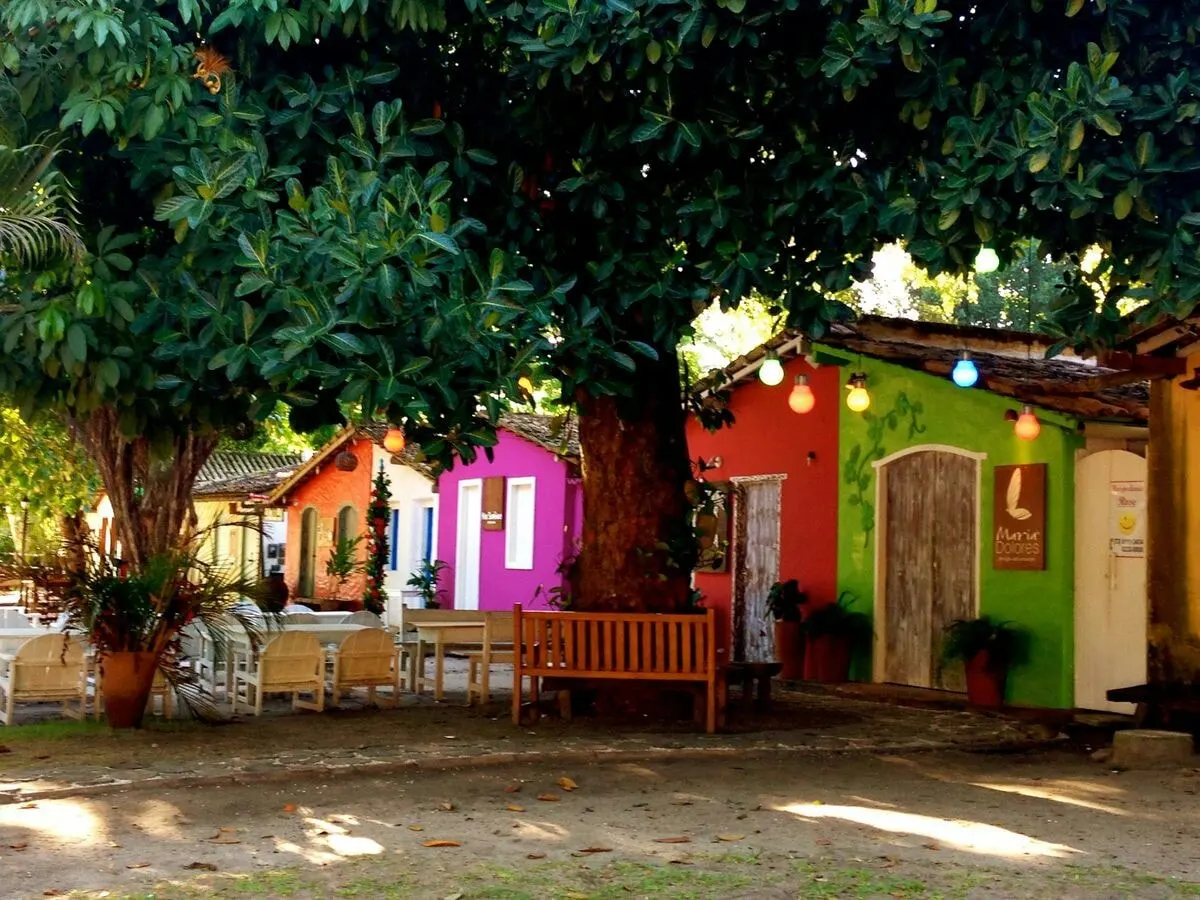
The Gaia Connection, located in Belo Horizonte, was created with the aim of building a new way of living together. Each one in his own home, but sharing common spaces, maintaining collaborative and collective coexistence.
The movement began in 2017 with the help of Lubochinski, when they held the first Introduction Meeting to Cohousing in BH. Still in formation, its members meet frequently to discuss the future of this cohousing.
According to its founder, the project is based on the aspects of synchronicity, attitude, planned and organized work. Everything with purpose and cooperation. In addition, it also manages Cohousing Minas, a virtual space for the same objective.
On their Facebook and Instagram pages, they are always sharing the new and achievements of the project. As well as the means of contact for those who want to be part of and contribute.
Do you have cohousings in São Paulo?
In fact, in a city very famous for its quality of life and highly renowned university throughout the country.
Cohousing-senior Villa ConLiver

Located in the Jardim Alto da Cidade Universitária neighborhood in Campinas, the Cohousing-senior Villa ConLiver It was created especially for UNICAMP teachers, specifically those who are already retired or over 50 years old on the verge of retirement.
After visiting several housing models for elderly people in Brazil and around the world, they saw in cohousing the best solution for what they were looking for.
To provide this collaborative and sustainable lifestyle, some important points were defined that housing should have.
- Reflect and transform: The proposal was to bring retired teachers and those who are close to retirement. The idea was to stimulate the creation of a new world.
- Social architecture: The model should incorporate the latest advances in psychology, geriatrics, gerontology, anthropology and sociology, thus contributing to a longer life, with greater quality and safety.
- Aging reality: Cohousing should focus on the opportunity to live a new stage of life in an extremely rich way in terms of community experiences and relationships. As a consequence, avoiding the dangers of isolation that can lead to depression and other health problems.
In an interview with Long live, retired teacher Dione Lucchesi said she was extremely happy with the result.
“What motivated me to integrate the Vila ConViver project was the fact that I saw a differentiated life proposal there. It was not to make a condominium, but to change the relationships between people. And it gave me a life, because we are at a time when these things are not valued”, he said.
Today, the village has 66 residents. Still, with the prediction of building 42 houses with 100 m2 and other four with 50 m2.
Most famous Cohousing in the world
In other countries, cohousing is already a more concrete concept. There are several communities around the world that have already achieved huge success. Check out a special list that we have separated:
Trabensol - Madrid, Spain
The community of Trabensol, in Madrid, was the first to be created in Spain in 2013. To this day, it stands out as one of the most important and famous when we talk about cohousing.
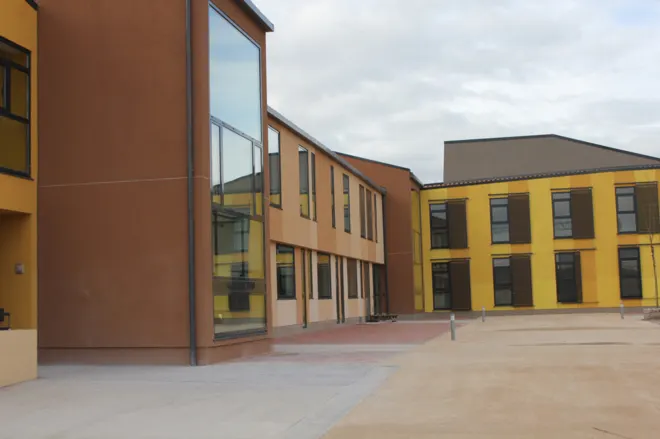
The project, non-profit, was developed so that it could make this collaborative housing for the elderly reality. Its principles are guided by the involvement of friends who made solidarity, cooperation, mutual help and the spirit of welcoming the core values of their coexistence.
With about 80 residents, they organize themselves in various committees to follow the collaborative purpose of their homes. From economy to gardening, each group is responsible for developing activities open to all.
The Cohousing Company - United States

Remember the American architect Charles Durrett we mentioned at the beginning of the text? Along with other consultants and experts, they formed one of the largest centers specialized in this housing model: Cohousing Company.
They have a strong and unwavering commitment to sustainability. In their construction, they use numerous more economical materials that cause less environmental impacts.
The company has designed about 50 communities in the United States. Among them, Muir Commons in Davis, California, was the first developed and featured in the most renowned American newspapers.
Durrett’s work is incredible and has earned him numerous awards throughout his career. Here are some of the most important:
- World Habitat Award, presented by the United Nations;
- Silver Achievement Award for the Community of Active Adults, by the National Association of Home Builders (NAHB) 50+ Housing Council;
- Silver Energy Value Housing Award from NAHB.
Mosaic Village Cohousing - Calgary
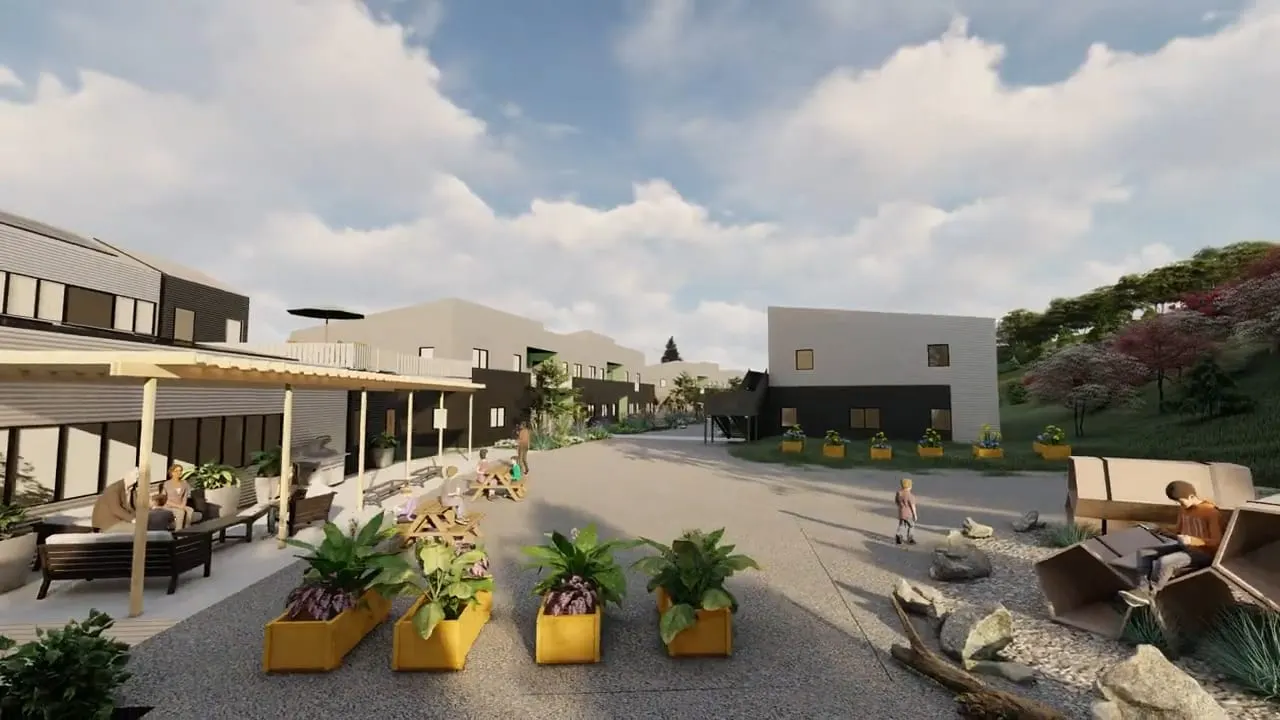
The Mosaic Village Cohousing in Calgary, Canada, is aimed at audiences of the most different ages, interests and backgrounds. They have a completely diverse group, ranging from elderly to couples and young people.
The complex has a complete infrastructure with everything its residents need. From public library to banks, doctors, dentists and other health offices.
In addition, the neighborhood in which it is located is close to some of the largest hospitals and health centers in the city. Apart from the various leisure options that are also around as parks, trails, shopping malls and recreational facilities.
In yours site, it is possible to know better about the community, services available and, still, inspiring stories of its residents. It is worth checking!
Conclusion
Cohousing is an amazing housing model! Your sense of collaboration and interaction among residents is inspiring and very advantageous for all its members.
The examples we see around the world should serve as support for this model to be realized in Brazil. Fortunately, we already have projects underway that can serve as an impetus for others to be created.
If you like this text, share it on social networks and continue your visit on our blogWe have several articles on real estate rentals.
