

CEP 01010-001 - this is the address of the Anhangabaú Valley. It is not necessary to understand much of the geography of São Paulo to know that the site is a central landmark of the city. More precisely, a landmark between two parts of the center: the old center of São Paulo, which extends towards the square of the Sé, and the new center, towards Avenida Paulista.
Recently the center of São Paulo was elected by TimeOut magazine as one of the coolest neighborhoods in the world! Lots of history and culture in one place! We are suspicious, because we love the region too much, even tell a little more about the advantages of living in the Center of São Paulo
And like everything in SP, it has changed enough – and will change again. But before entering the subject (or controversy) of the new reform of the Valley, we will go back a little bit in the past of Anhangabaú, which is a symbol of the transformations of São Paulo and tells the story of the city better than anyone.
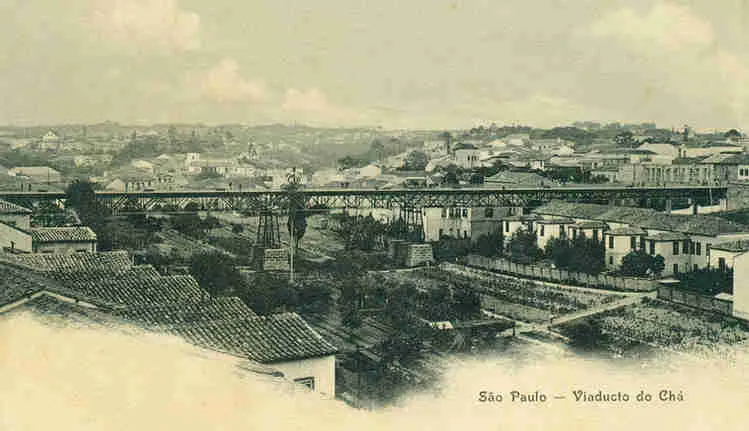
What Anhangabaú Valley was like in the past
Anhangabaú Valley: What was the Tea Viadult like in the past?
Until the beginning of the 20th century, the Anhangabaú River was running through the valley, which has its sources in the neighborhoods of Vila Mariana and Paraíso. The urban expansion of São Paulo had not reached the region (most of the houses still concentrated around the Sé), which was occupied mainly by sites and farms.
In fact, there was a black tea plantation in the region (property of the Arouche Rendon, for those who want to look for the reference) that was the reason for the name of the Viaduct of Tea. As the city grew, urbanization arrived in the region at a time when São Paulo was known as the “capital of coffeeIn 1906 the river was channeled and from then on Anhangabaú Park was gradually emerging: with different works of the 1911 Bouvard Plan, along with the Municipal Theatre and Rua Líbero Badaró, it was an almost French landscape.
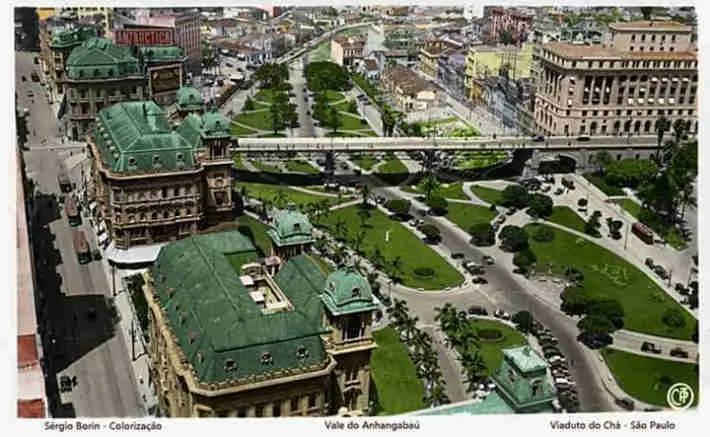
The end of Anhangabaú Park and the era of cars
End of Anhangabaú Park
30 years later, São Paulo was another city – it grew a lot. And things in the Anhangabaú Valley also changed: in 1940, the park was undone to build a expressway that connected the north and south zones, connecting Tiradentes Avenue with the avenues 9 July and 23 May. The green area to the best Belle époque São Paulo became a concrete desert made only for cars.
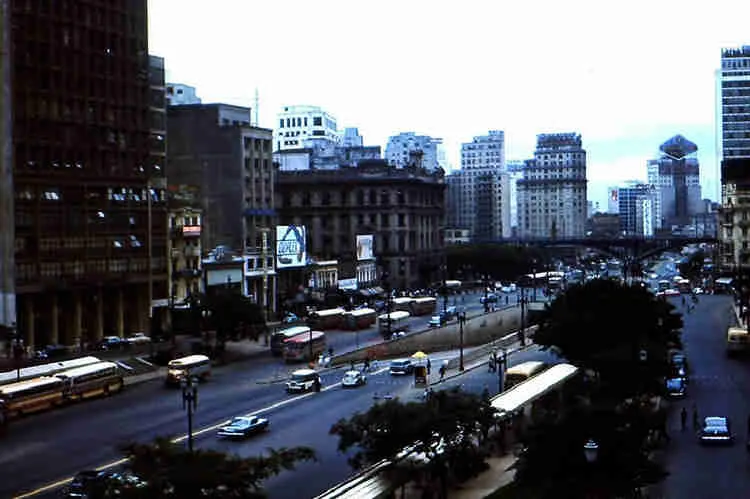
Mobility has always been a problem in the city, but over the years, urban degradation and quality of life have also become important issues: with the growth of the city, the need for green areas and leisure options was also growing - the idea was that people could occupy the spaces in the center, not just use it as a passage stream. From this need came the Anhangabaú Valley that we knew in 1991.
The 1991 reform and its problems
The 1991 Reform
Perhaps the biggest problem of this new project for the Anhangabaú Valley was that, in an attempt to unite the best of both worlds, the result was not positive for any of the problems: people were circulating there, but preferred the viaducts. Some people parked there, but it was not that pleasant.
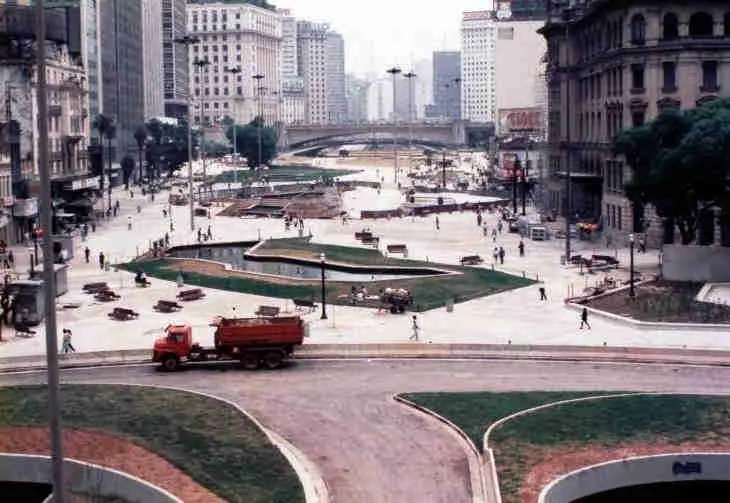
Of course, the project was beautiful and the place was the scene of several important events – one way or another, it was used – as public spaces should be used. But 30 years later, the place suffered from urban degradation, scaring away the audience that the place should have.
New Anhangabaú Valley: Made for people
New Anhangabú Valley: Made for People
Now we're on construction again. Jan Gehl, with the sponsorship of the Itaú bank. Soon it should be ready. Without entering the merit of the landscape project – which has not yet been completed, therefore without hasty conclusions – the fact is that the region needed a requalification: when a large space like the Anhangabaú Valley stops attracting people, it is a sign that something is wrong.
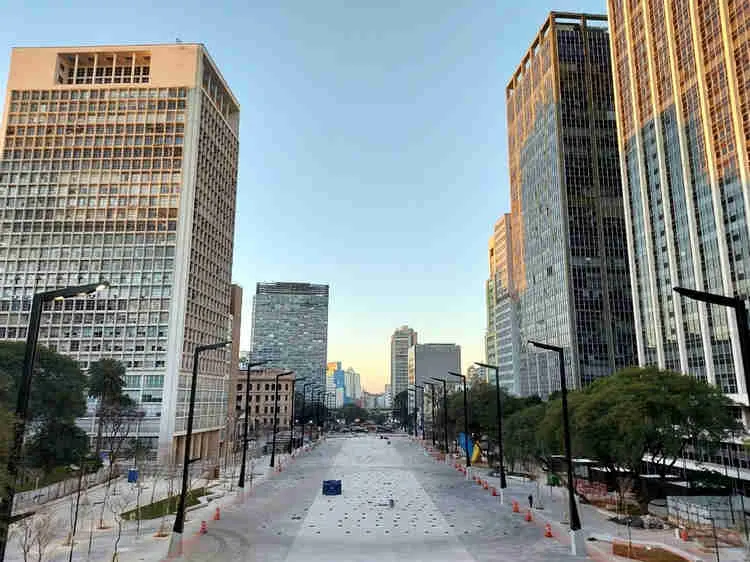
São Paulo is a city that builds a new center every thirty years, more or less: The See, the Av. São João, Paulista, Faria Lima, Berrini... Instead of trying to expand the urban network more and more, creating new problems of urban mobility, perhaps the city should look at the center and what is already done: places with easy access, plenty of service provision, some of the city's postcards, all there. But there is a fundamental element in any promise of revitalization: people. People must be drawn to the center – what is public must be occupied by the public.
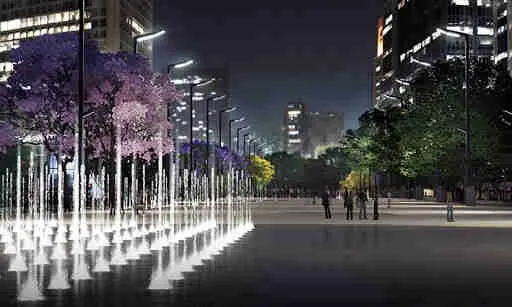
The revitalization initiative is part of the new City Master Plan, more specifically the PIU (Urban Intervention Project), which seeks to attract more people to the region. The center of São Paulo has a daily flow of two million people, so the idea is to transform the Anhangabaú Valley from a place of passage into a place of residence, especially in the night. Thinking of ensuring the agenda of events (and also the maintenance of space), the city has already opened concession notice, placing the administration in the hands of the private initiative. One of the most delicate points of the project is the maintenance of the park and the city is betting on partnerships with other sectors to ensure that the space works according to the proposal.
São Paulo in search of more leisure areas
Currently, there are several parks and leisure areas in progress in the city: Paulista closed to cars on Sunday is a success. The Worm follows the same path and the legend says that one day it will become a high park. Even the works of Augusta Park should begin soon. The point is that São Paulo needs leisure options according to its size and population: in a city known for stress, this should be a priority.
If the Anhangabaú Valley is used to tell the story of São Paulo, perhaps that is the sign that things are changing. We have already had plantations, we have already hidden the river, we have already walked in a European garden, we have seen the dominance of cars, now we see the efforts to bring people back. It would be very good if it worked – the center certainly deserves it.
For those who like architecture and urbanism, we also put on the blog a very nice text sobr os The most beautiful buildings in the cityIt's worth checking out.
