

São Paulo is full of incredible details that sometimes go unnoticed in the middle of everything that happens in this city. If you look up, you will probably see a Infinity of buildings – and if you go up in a very high place and look around, you will probably see the same thing. For some, it may seem like the same thing as a great stone jungle. But there is a lot of beauty in all this, you know?
It's funny to notice how verticalization has changed over the years, which was once unique and new and now draws little attention, with rare reservations from groups that invest in the buildings More creative. Every corner, a new enterprise emerges, with great chances of making the scenario even more tedious to those who have already become accustomed to the high walls, cameras, garage floors scattered around or concrete crates without any charism – a bad taste that insist on calling it a “neoclassic” style. Not inviting, including for the eyes.
In the 1920s, the elites of São Paulo realized that Brazil was late in the arts on the old continent, and at that time began a huge effort to bring some of the ideas that circulated around Europe to Brazil. In this context, the verticalization of the city began. buildings with a large number of large apartments, with floor-to-ceiling windows, columns, tablets, artistic panels, cast iron railings, noble materials and gardens on both the ground and the heights. The architecture was integrated with landscaping and the plastic arts, making some of the buildings true works of art – proving that urban landscapes really deserve a closer look.
We separate some of our favourite buildings from this city, using the following criteria: residential use, taste and sophisticated architecture – preferably not cheesy.
1. Anchieta Building
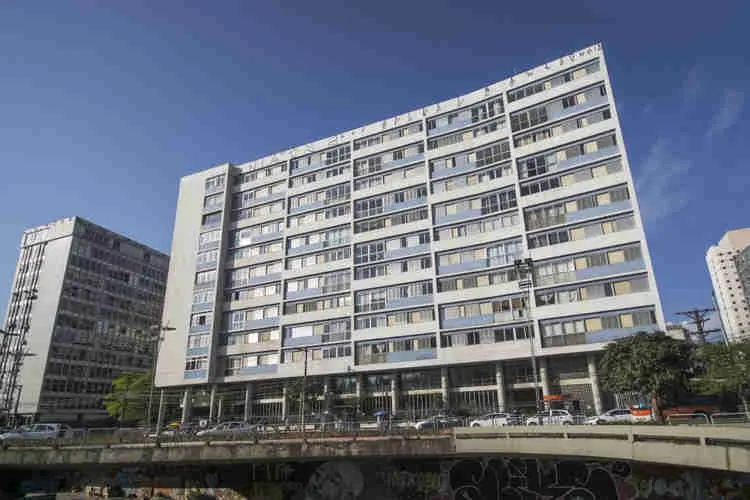
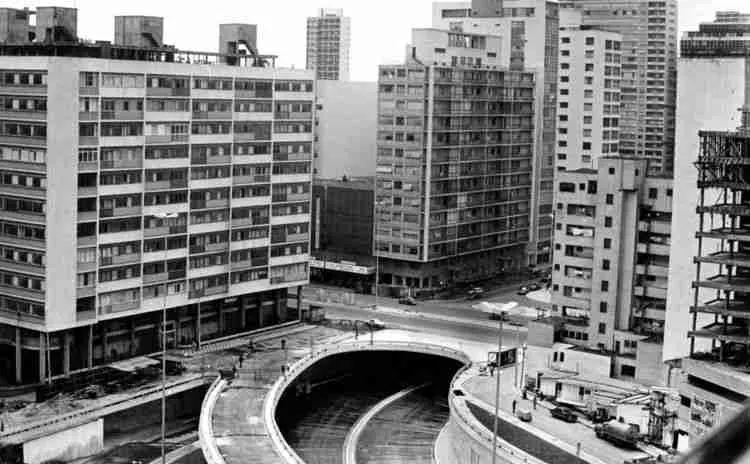
Nobody remembers that it's still Avenida Paulista, but it is. Between Rua da Consolação and Rua Minas Gerais, two blocks from the city's most beloved avenue. That piece houses one of the main modernist icons in São Paulo, the Anchieta Building. Opened in 1941, it had some of the main modernist features as pilotis (those pillars on the ground that support the construction, great novelty at the time), duplex apartments and colored tablets panels.
The project is the Rio de Janeiro office M Roberto, which is not only a modernist legend, but is one of the country's longest architectural companies, active since 1930, when it was founded by Marcelo Roberto. The building is remembered by the São Pauloans for a much more ethyl than architectural reason: on the ground floor, the Bar Riviera – a reference point in the Bohemian culture of São Paulo worked for many years. The Riviera closed its doors in 2006, after 56 years of operation and a debt quagmire that ended in eviction.
Unfortunately, the Anchieta Building has seen better days. The garden has become dry land, from the facade you see broken glass, graffiti and infiltrations into the walls. You don't even remember the building full of life decades ago. And if it's bad even though it's in the middle of Paulista, imagine how there won't be any other less frequented roads in the city. But still, on that forgotten block of Avenida Paulista, Anchieta is a memory of São Paulo modernista – and bon-vivant - from decades ago.
2. Building Park of the Hortênsias
John Artacho Juror it is without a doubt one of the most controversial names among the famous architecture of the twentieth century. Perhaps because he was self-taught in construction, without ever having a traditional degree in the area, or perhaps because of his bold projects in what was being done at the time, or perhaps because of the enormous success he made as a contractor - loved by some, hated by many others, but without a doubt an important figure in the history of the city.
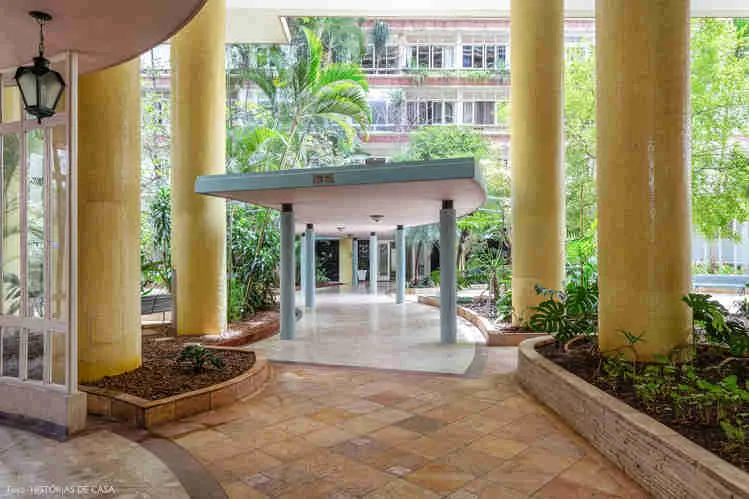
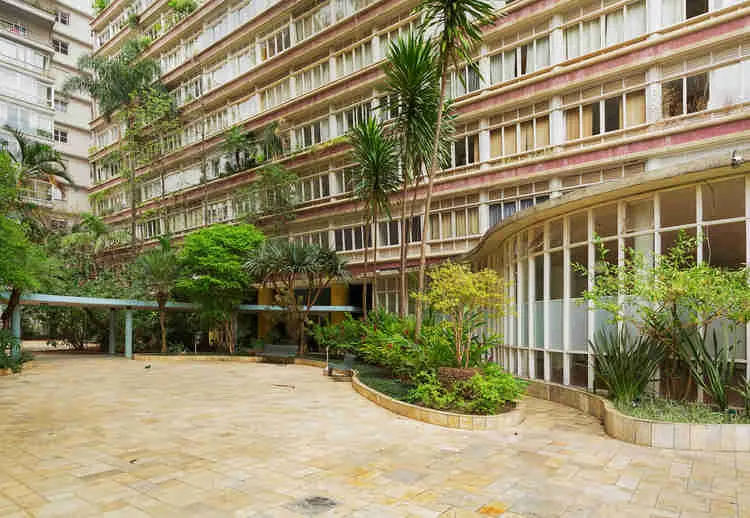
Once you enter the Park of the Hortênsias, you can see that this is not just another generic construction of the city. Its facades are colorful and surrounded by gardens – including in the windows! Green corridors are hard to find in today's buildings but they make all the difference in the lives of those who like little plants. In addition to plenty of green area, the lot in which it was built is generous and allows the freedom of the forms created by the architect. The size of the common areas he designed (in 1957!) is envying most of the current projects that value the idea of community in condominiums.
Juror, besides self-taught architect, builder and embodyer, was a master in real estate marketing. He was able to create right products at precise times, and incorporate the best of the art of the time into several of his projects – success as a contractor, along with his training in architecture practice, caused him to suffer persecution of Crea and to be persona non grata among the key names of the São Paulo architecture of the time – summarizing: envy.
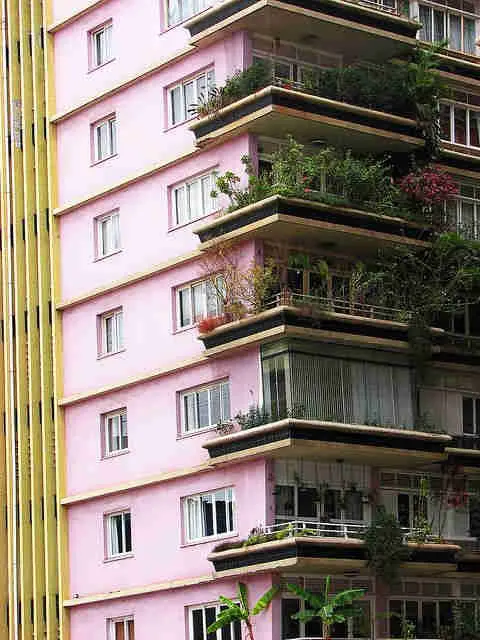
Other honorable mentions of the architect are the Planalto Buildings, Cinderella, Bretagne – all of which are worth Google research.
3. Praise Building
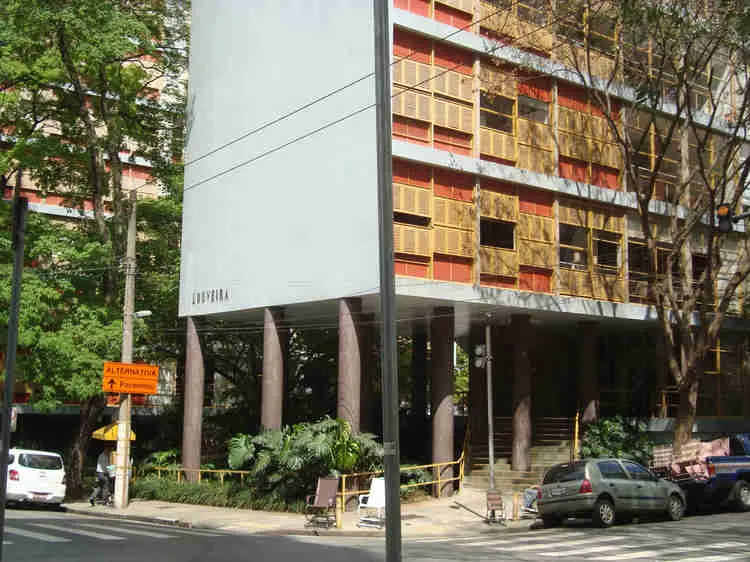
This is another one on the list of mandatorys, mainly due to the signature of João Batista Vilanova Artigas (or only Artigas, for the intimate) in the project – maybe he is the most dear of the list of architects wantedinhos in São Paulo.
In the 1940s, São Paulo became known as “the city that grew the most in the world”, so fast that it was the expansion of the urban network – and of course, it needed space to accommodate so many people. Quickly, that city that remembered a French metropolis became a city without landscape, without order and without control, stage of great spatial conflicts.
The great architects of the time seek answers to this problem – and here is the importance of Ed. Praise. The Higienópolis neighborhood has always been a stronghold of traditional palaces, which with the growth of the population, have gradually given places to residential buildings. But anyone who thinks this was a cause for devaluation of the region, quite the contrary: it was necessary to convince the elites who lived in the neighborhood to leave their spacious houses and move to apartments. Artigas, in turn, managed to do this masterfully.
The building makes a great use of its spacious terrain and Vilaboin Square, just across the street – the idea was to make the residents feel like they were in a garden, remembering the palaces of the neighborhood. At the same time, the project is perfectly in the logic of the city's urbanization, that is: it brought some elements that have become a rule in construction, being reproduced until today throughout the city. This can be observed in the geometric division of the units, the straight lines, the parallel blocks.
Of course Vilanova Artigas stood out among so many other architects for good reasons. With training of engineer and artist, he was a key figure in the approach to architecture and the plastic arts. Today, it is the biggest name of the call São Paulo school He even designed the building in which the architects are formed at the University of São Paulo – and the FAU building today is from the city's postcards.
Oh, Morumbi Stadium was him too!
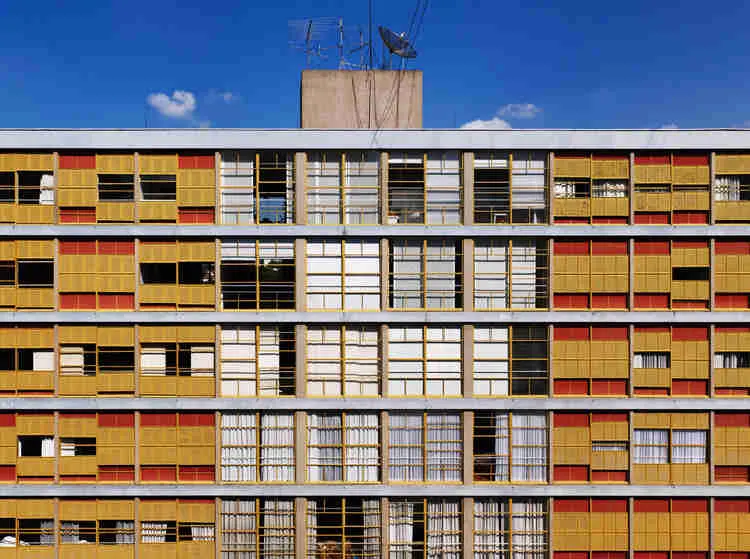
4. Ed. Abaúna
Ed. Abaúna was designed in 1960 by the architect Eduardo Knee de MelloFor those who are not in the field of architecture, this is probably an unknown name – but their contributions to Brazilian construction are much more famous: Kneese, along with some colleagues, were the precursors of the use of prefabricated concrete in Brazil – today, is an almost mandatory resource in every project.
Knee still worked with Oscar Niemeyer in the project of Parque do Ibirapuera and Brasilia. He led the creation of the department of São Paulo of the Institute of Architects of Brazil (IAB), was president of the Regional Council of Engineering, Architecture and Agronomy (Crea), and was present in the creation of the Union of Architects of the State of São Paulo, in 1971. He was a professor of architecture for over 50 years, taught at Mackenzie, USP and Fine Arts until his death in 1994.
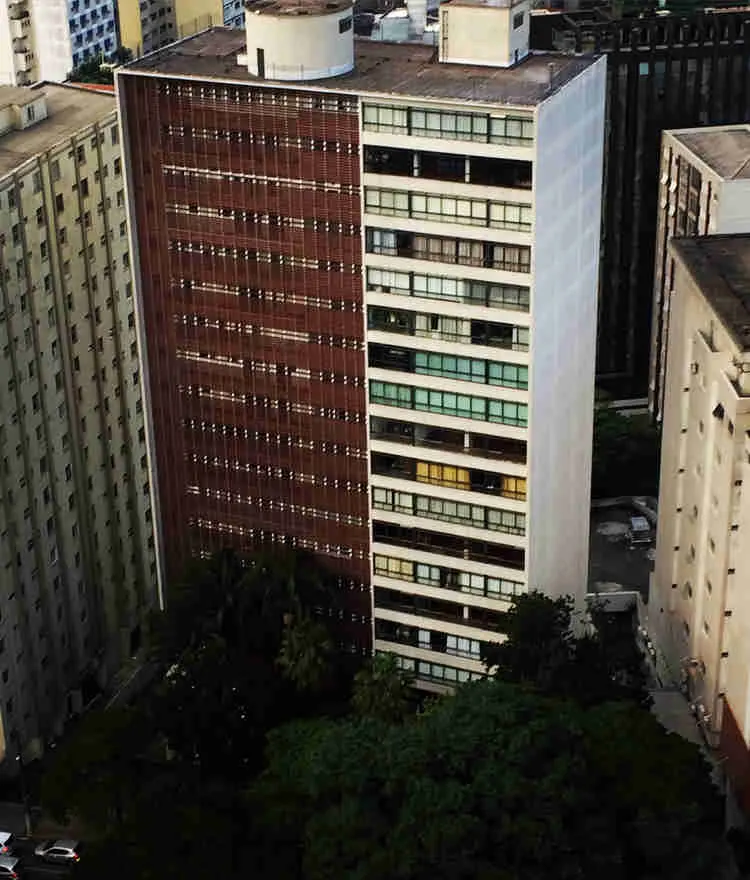
The Abaúna was the only luxury project of the architect's career, which normally dedicated itself to large residential buildings for the middle class, several scattered around the city. However, the point outside the curve of Kneese's trajectory is also a point outside the curve in the urban landscape of R. Antônio Carlos, where it is surrounded by more recent (and much more generic) constructions.
In the building, we have an apartment to walk - 500 m2! To give privacy to the dormitories, the facade is covered with wood Cabreuva, while the living room has floor to ceiling windows. For an architect known for the use of prefabricated concrete, the wooden plates on the facade are a sign of rare good taste to be found in the most recent constructions.
5. Copan
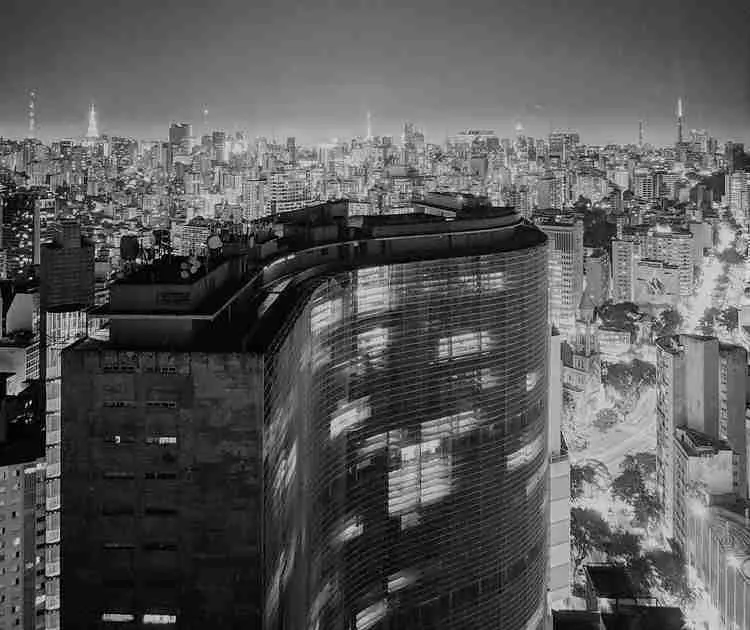
There is no way to make any list of architecture in São Paulo without mentioning Copan – the building is an icon of the city. Although Niemeyer takes most of the fame, engineer Joaquim Cardozo also deserves recognition for having made the project stand still.
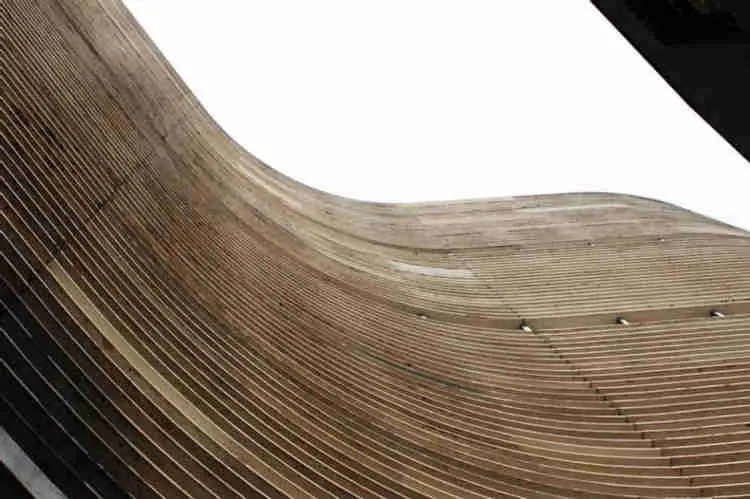
At first, Copan was to be a great shopping center in the center of São Paulo, which in 1966 still lived all the glamour of São João with Ipiranga. However, the demand of the real estate market was enormous at the time, which caused the project to be changed for residential use. About 1200 homes, where 5,000 people live. It is the largest residential complex in Latin America and is located in the heart of the city – it even has its own CEP.
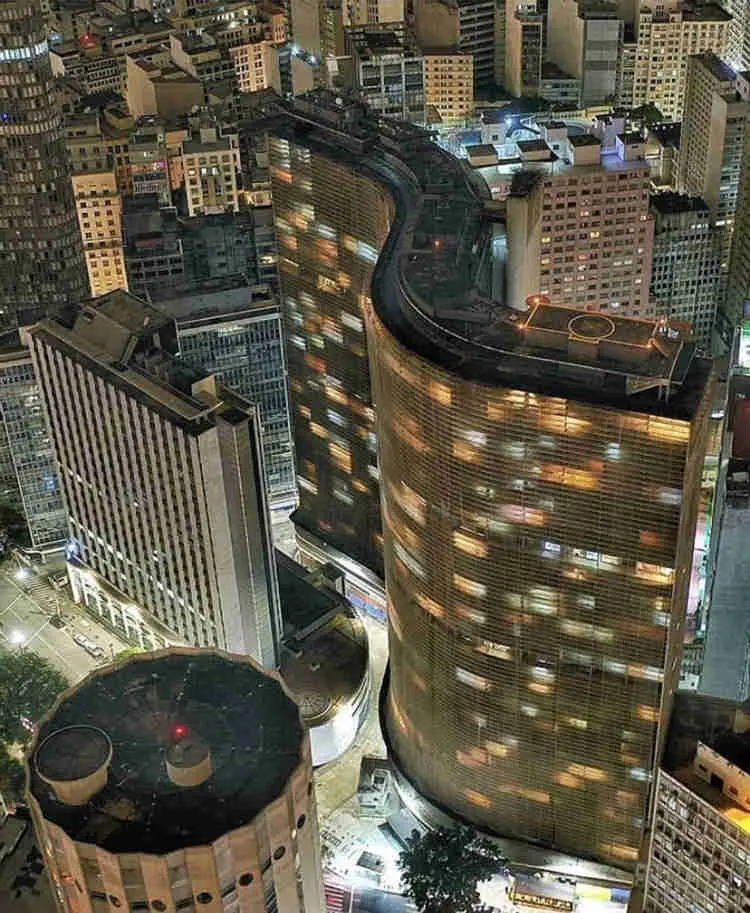
6. I build Eight in Pines.
Ed. Eight is on this list mainly to show that buildings are still built with great taste in this city.
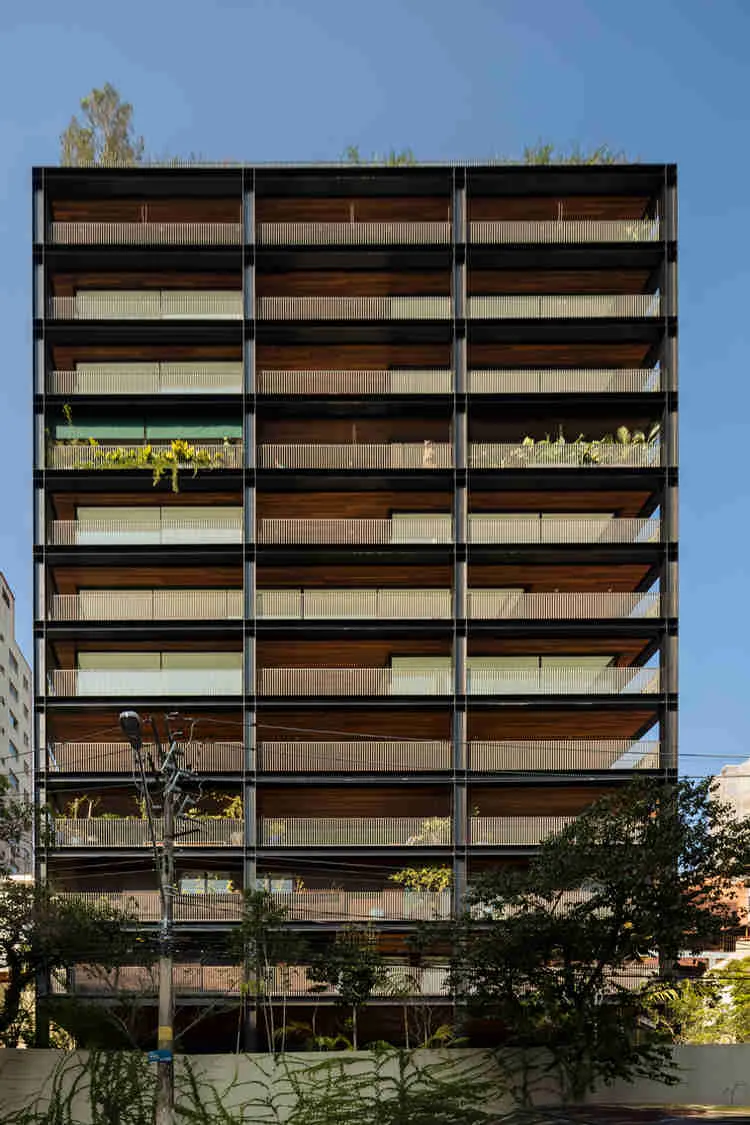
In many ways, Ed. Eight is a synthesis of important that was scored in this list: the use of the land, the use of green areas, generous lighting, geometric shapes and colors. Contraried on a slope, it is a comfortable, functional and beautiful project, with a privileged view of the banks of the Pinheiros River.
The architect, Isay Weinfield, perhaps it is better known for having designed the charming units of the Vila Bookshop – but its name is among the most famous of the moment. Its minimalist style and the tendency to form abstractionism is a coincidence with the current state of contemporary art – will certainly mark ground in architecture “of the 2000s”.
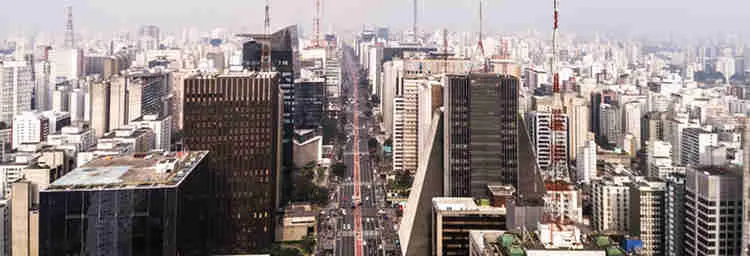
Seen beyond all this ash of São Paulo is certainly a difficult task (for us and for the architects), but it is not impossible. A city so large has several charms in the most unexpected places, and that includes its architecture. Here we separate only six constructions that are icons from the architecture of são paulo – but of course there are many others. These are just some of our favorites – what are yours?
