

Who never wanted to escape to nature to escape the stress of the routine in the city? We know that getting away from the routine is difficult, but nothing prevents you from bringing a little nature into your house, even if you live in an apartment and build your own garden!
Being a plant mother is an increasingly common alternative for those who cannot have a pet. They bring more life into any environment, they look great as decoration, they can serve as company for those who live alone and even therapy for those who need it - not to mention that they are a healthy way to get distracted without leaving home.
Starting a garden can seem like a challenge, especially for those who have no experience in caring for plants. But we assure you it's much easier than it looks, especially with some tips already savvy from who tried to get it. Of course you shouldn't start with a giant vertical garden occupying a whole wall! Start slowly and build your private jungle as you gain confidence. So we've separated 5 tips for you who are thinking of starting your garden at home:
What to know before you start
First, you need to consider your lifestyle and know how much free time you have to take care of little plants. They stand still and give less work than pets, but that doesn't mean you won't need a space in the schedule to take care of them.
If you don't have much time, choose more rustic plants, they need little care. Species like succulent, cactus and other foliage that have slow growth are ideal for those who are starting.
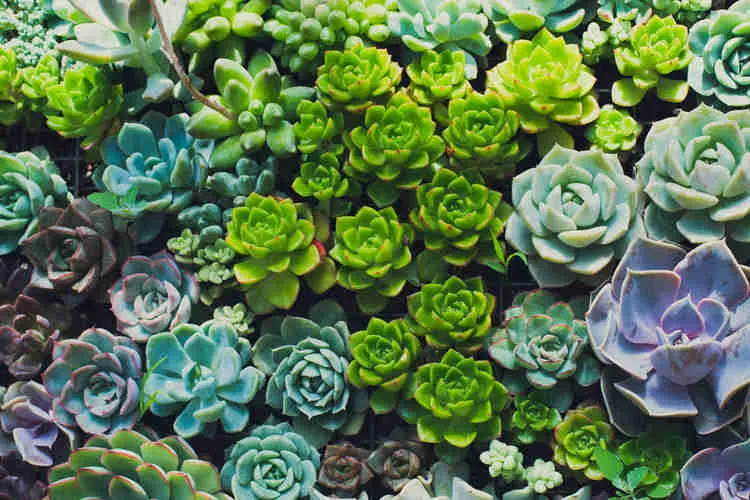
But if you have time to dedicate yourself to your garden inside your apartment, feel free to venture: from seasonings, flowers, orchids, violets, vegetables and even carnivorous plants. Important to remember that each one has specific preferences and demands, then look for information about the cultivation of each one.
An important point for choosing how to set up your garden inside an apartment is to select which (or which) little plants you will adopt. For this you need to know what the light condition of the environment is that you intend to leave your plants. Each has a particular need for sunlight – in the apartments, we are not always able to offer exactly what a species needs. But don't worry, we'll take this up over the text.
What tools will I need for My garden inside the apartment?
Vases and earth, basically.
As for the land, in floricultures or markets you find organic land, it will suit virtually all your needs. You will also need fertilizer, the most common is Nitrogen, Sodium and Potassium (NPK 10-10-1010) and it works well with most plants – but if you have much excited about the plants, you can make a organic compost at home
A valuable tip is the self-irrigible vessels that help a lot who have spent a lot of time outside the house and You live aloneDon't forget the plates and put sand in them to keep the dengue mosquito from nesting in them.
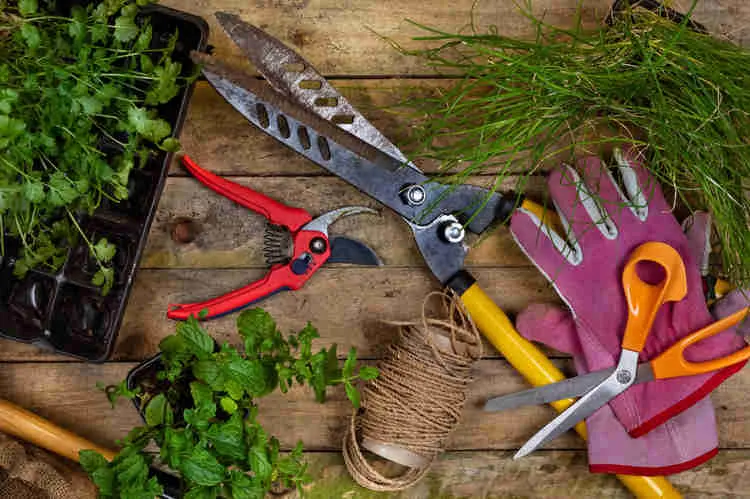
There are gardening toolkits with shovels, rakes and pruning shears – but for those who want to save, a spoon and ordinary scissors are enough to make their garden inside the apartment
Light conditions:
As we speak, evaluating the light condition of the environment is essential when it comes to choose the plants.
Normally, the species are subdivided into three categories: shaded ones (which survive only with indirect lighting and which can suffer burns if exposed to direct sunlight), half-shadowed ones (adapt by receiving direct sunlight during a period of the day, about four hours) and sundry ones, which only survive with long hours of direct light.
Full Sun Plants:
They're the ones that need three or more hours of sun every day.
• Spices (salsa, chives, basil, rosemary)
Teas (mint, chamomile, bold, etc.)
• Flowers in general
• Suculent and Cactus
Half Shadow Plants:
They are those that do not tolerate very shady or very sunny environments, are ideal for indoor or shaded environments.
• Orchids in general
• Delicate foliage (sambaias, veneers, avenca, adan rib)
Shadow Plants:
Those plants that are naturally grown in environments with little incidence of sunlight.
• Decorative foliage (aglaonema, lily of peace, singon, sword of san jorge).
The first steps to your garden inside apartment
First of all, take it easy! One of the coolest things about having plants is that they teach you to be patient and to respect their time – so don't put too much expectation on the little plants. It's normal to miss some things at first, but don't let it shake you: the best way to learn is to roll up your sleeves and go experimenting to see what's right in your hands. Before you start, imagine how you will do the garden in your home: evaluate the space, see how which places receive sunlight in which places of the day and go to the flower shop with some ideas in mind. Each species has specific needs, so Google is your friend when it comes to knowing the peculiarities of each species.
A valuable tip for those who are starting the garden inside the apartment is to avoid small pots: they may seem easier to handle, but the chances of you forgetting to take care of it are much greater. In addition, the more delicate, the more care they require: plants with larger roots have a better chance of recovery if you make any mistakes. On the other hand, cactus and succulents occupy little space and are very tolerant with whom it is beginning, they are also an excellent option for first-time gardeners.
What are the most common pests in a garden inside an apartment?
CoandIf all the work is not enough to set up and take care of your garden, there are plagues that can destroy all the work in a few days. But don't be alarmed, all this is natural: keeping a positive look, garden pests are indicators that something is wrong with the way you are taking care of your little plants.
The pests are more frequent in the hot seasons of the year, which is the breeding period of most animals – so here is another reason to bend the attention in the garden during spring/summer. The most common are:
Cochineal:
This type of pest usually appears in groups and always seek the hard part of the plant, that is, they are usually in the stalks or trunks – this is because this type of pest likes to suck the toughest parts of the plant. They are usually white and half-gossed, sometimes also have brown verruinhas.
Furgeon:
The aphid in plant may be yellow, green or black, as in the previous case, they may also appear in flocks. They look like little beetles, usually have no shell, but have eyes and legs that look like them. Unlike the cochineal that prefers the hardest parts of the plant, aphids are considered pests on the leaves of plants, but can also manifest in the bud, petals and buds.
Cutlery ants:
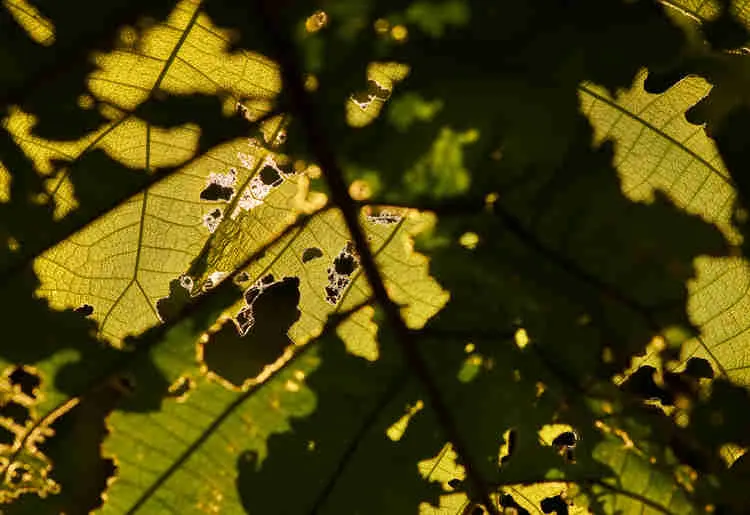
The cutting ants are typical of larger gardens, they are usually black or red and larger than the sugar ants, so their ability to pluck a plant is faster. Your identification may be more laborious, because they have nocturnal habits – but you still know if your garden has been attacked by them, because this kind of ant leaves the edge of the leaves in geometric form. To avoid cutting ants, organic matter always adds to the soil, as this type of plague indicates that the earth is very compacted and poor in minerals.
Of course, there are only a few of them – there are many others. But prevention is the easiest way to avoid these disorders: don’t leave your plants weakened – usually insects and pests attack the plants when they are weakened, either by excessive heat or humidity, by lack of nutrients in the soil or little ventilation. Thus, to scare the pests, the first step is to take good care of their plants, so that they can defend themselves naturally from external attacks.
Learn to read the signs of your garden inside your apartment
It's important to keep in mind that there are no General laws for the care of small plants – you need to learn to understand the signs that she is going through and how to deal with each of them.
For example, the amount of water needed for the plant is never fixed. It varies according to the temperature of the season — in heat, more water is needed; in cold, less. So the right thing to do is to feel the land in the vase, to check if it is dry and, from there, to know whether it needs water or not. Some like a little water every day, others prefer to go a few days without it.
If the plant wilts, has stained leaves or is growing too much, it is not for nothing. When something is not going well, it shows — and it is necessary to understand what the problem is. Usually, it has to do with lack or excess water or light: it is very common for plants to dry out for lack of care, but they can also die drowned or sunburned.
If the leaves of the whole plant are withered, it is probably lack of water – and if all are drying, it is lack of water and excess sun. Watering should be done in the morning or late afternoon, to prevent leaves from cooking in the sun: some species like water in the leaves very much, but this may be fatal for others – it is worth investigating case by case.
Yellowish spots are usually excess fertilizer: the ideal is to fertilize the pots once every one or two months, putting the fertilizer as far away from the root of the plants as possible. Fertilizers usually come with instructions of quantity and how to apply, be careful!
Finally, it is normal for the lower leaves to dry and fall. You should remove these leaves when you are going to make the pruning – but watch not to over-move the plants! Learning to respect each other's time is one of the hardest parts to care for the garden, usually over-handling is more harmful than stopping pruning. Don't be anxious!
For more tips on how living and living in a sustainable way and gardening in general, visit our blog!
