


Living and living in a sustainable way is not something outside our reality, quite the contrary. As simple as they may be, several actions of our daily lives can make all the difference to the environment and, above all, to have a more sustainable life.
Simple attitudes that range from recycling the garbage to changing the house lamp can generate a great difference in lifestyle, contributing not only to a better coexistence with the community, but to the environment itself.
In addition, several properties are already built with a structure focused on promoting the use of the
intelligent resources, as is the case of collieving for example.
But what are the best actions that can be taken to live and live in a more sustainable way? If you don't know the answer, we're here to help you!
In this text, we will explain what sustainability is, the importance of thinking and performing actions that aim at these ideals today, and the 10 best tips that can be used in your day-to-day life that will surely help you in this more sustainable way of life.
Before we begin, check out the topics that will be addressed:
● What is sustainability?
● Why is it important to live in a sustainable way?
● What is sustainable living?
● Sustainable properties: what are they?
● Tips for living in a sustainable way.
Let's get started!

What is sustainability?
Sustainability can be defined in a very simple way: as a set of actions aimed at meeting the needs of the present without compromising future generations.
In other words, this term seeks the balance between the availability of natural resources and their exploitation by society, so that the quality of life of the population is maintained without this affecting the environment.
For sustainability to happen, it must be based on three pillars:
● Environmental: focuses on the preservation of the environment and the balance between the supply of society's needs and the rational use of natural resources;
● Social: active participation of the population in social development with proposals aimed at well-being and equality with the environment;
● Economic: aims to explore natural resources in a sustainable way, without this harming the supply of future generations.
In other words, in order for a society or system to be considered sustainable, it is necessary to encourage the conservation of these three elements so that the first two are not harmed.
In recent years, several discussions on actions that seek a more sustainable lifestyle have taken place in the world, as we have seen serious ecological problems that can bring consequences for people's health if extreme measures are not taken.
This was proven in a report released by the UN in 2019, produced by 250 scientists from more than 70 countries that stressed the importance of environmental protection for the preservation of people's lives.
Despite the worrying scenario, the research stated that the world has the science, technology and financial resources it needs to follow in the direction of a more sustainable development path.
Why is it important to live in a sustainable way?
With the above mentioned data, we can affirm that living and living in a sustainable way is extremely important for the maintenance of the environment and, consequently, for the preservation of the quality of life of all society.
How many times have we not encountered news involving problems such as water shortages, temperature rises or even large fires as we have seen in northern Brazil this year?

All these environmental problems directly affect our quality of life, and can be combated in small actions of our daily lives.
Living in a sustainable way is something simple that can be easily incorporated into your daily life, preventing natural resources from being exhausted and future generations from being harmed, either through individual actions such as recycling or even through joint actions in real estate.
But what are the best practices to ensure a more sustainable way of life?
The answer to this question is not difficult. There are several actions that, as simple as they may seem, can make all the difference and contribute to this lifestyle.
Let's understand more about this in the next topic.
What is sustainable living?
Living in a sustainable way is already the routine of many people and, especially, of many buildings strategically constructed for this purpose. Just adopt a set of actions and practices that aim at preserving the environment and, consequently, the welfare of society. how to live more sustainablely in a metropolis in an article published in 2016.
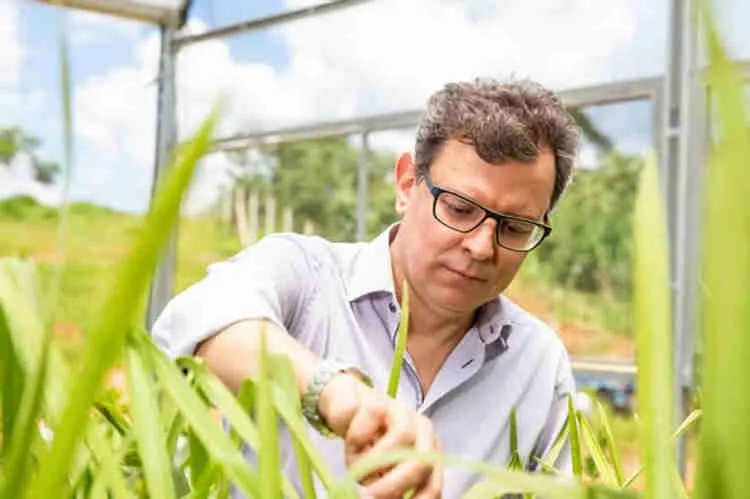
In an interview with the portal Terra, the civil engineer and consultant of UPNOS (United Nations Project Services Office), Julio Souki, defined this proposal as something practical and collaborative.
"Living and living intelligently means thinking about the practicality and harmony of solutions. Building sustainable housing, which reduces impacts on the environment; thinking and relating collaboratively to people who are close, creating connection and development for the community itself; taking advantage of technology to optimize what is possible; using resources that are really necessary, without waste, whether of space, materials, money, time and natural goods", I did.
According to Souki, to adopt this lifestyle, it is necessary to think of a set of actions that cover and impact the entire community, working collaboratively so that everyone benefits from the sustainable way of life.
As an example, in the same interview the engineer cites a great example that has been growing increasingly in the large cities: the construction of so-called sustainable buildings.
Sustainable properties: what are they?
The main proposal of sustainable real estate is to deal with the principles of sustainability to conscious techniques in the construction or reform of the place, and the way of life of the family, based on a mindset of care and knowledge about its consumption and its actions.
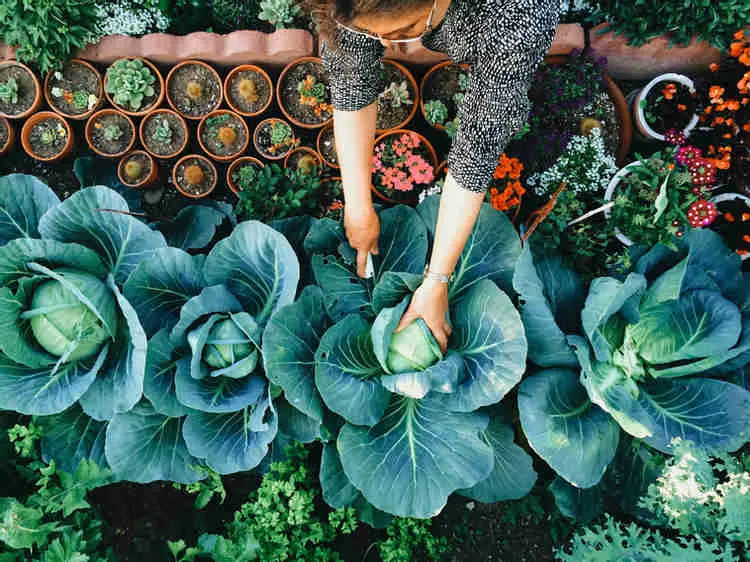
In other words, these properties are built and thought based on various technologies and innovations to provide a sustainable lifestyle, with differentiated proposals that encourage actions for collective use and consumption of residents, such as: shared leisure and coexistence areas, coworking, community organic garden, self-sufficiency in drinking water, and underground power grid for example.
Thus, besides generating greater efficiency in the use of condominium resources and a decrease in the amount of materials used, the quality of life of residents is much higher, providing a higher economic, social and environmental performance.
To be considered a sustainable property, however, the site must receive a certification that proves its ideals. Among them, one of the ones that has gained popularity in the real estate market is EDGE Certification (Excellency in Design for Greater Efficiency).
Developed by IFC, a member of the World Bank Group, this system aims to make real estate more resource efficient. In other words, it provides owners with the most economical ways to incorporate energy and water saving options into their buildings.
Used in more than 120 countries, it is arriving for the first time in Brazil and is considered as a reference for its great environmental results and practicality.
Wanting to be an affordable certification, EDGE provides easy and efficient calculation of benefits and, within minutes, a designer can determine the ideal combination of design strategies to get the best return on investment.
"We need to create and seek real estate projects that connect with this purpose of life, which do well for people, for nature and for the territory, where the development of a sustainable local economy is prevalent, driven by people who produce and live in the region," Defends Souki in the same interview.
Today, adopting a sustainable lifestyle is affordable and practical, so we separate the top 10 tips for all of our citadels who wish to start adopting these practices. Check it out!
Tips for living in a sustainable way
Throughout this text, we have seen that living and living in a sustainable way is something we can apply in our daily lives through simple and practical actions, so we have separated some tips that will certainly help them in this mission!
● Have Plants at Home
● Reduce the trash
● Separate and recycle the garbage
● Save water
● Change the lamps
● Use renewable resources
● Upcycling
● Have a composite
● Calculate the reform
● Invest in Ecofriendly
Many of these terms may seem strange and new, especially for those who are moving for the first time. But don't worry, because we will approach and explain each of them separately so that you have no doubt in adopting this sustainable lifestyle.
Come on!

Have some plants at home
Much more than serving as decoration items, having plants at home can bring incredible results to the environment and especially to people’s health!
In an interview with My House magazine, botanist Ricardo Cardim states that plants provide benefits such as: reducing noise pollution; improving air quality by holding dust; recycling toxic gases and releasing moisture when irrigated, all contributing to making the air cooler.
Who has never encountered the famous vertical gardens in downtown São Paulo? They are a great example of real estate that cares about a sustainable lifestyle and actions that promote well-being and an improvement in quality of life.
But for those who want to adopt this practice at home, start planting small vases or flower trees for example. They are great for those who do not have experience with gardening and want create a garden in your apartment, and will certainly help improve the air quality in your home.
Reduce Trash
Did you know that in 2019, Brazil was considered as the Fourth country that most produces garbage in the world?
According to the World Bank, more than 2.4 million tons of plastic are discarded irregularly, without treatment and in many cases in open - air dumps.
But after all, do you know the damage to this large amount of garbage? According to the United Nations Environment Programme (Pnuma), plastic pollution generates more than $8 billion of damage to the global economy, as well as directly affecting various sectors of trade such as maritime and tourism.

To avoid this waste and wear, there are several practices that can be adopted, such as using retraceable bags and packaging; avoid buying food wrapped in super packaging; and avoid plastic based products, for example.
Separate and recycle the garbage
In addition to reducing waste, another key measure to ensure a sustainable lifestyle is to worry about recycling discarded material. Separating waste between organic and recyclable helps not burden landfills and even can generate income for thousands of people.
For this, it is enough to separate dry waste by the type of material and to properly target it at ecopoints, either by selective collection or directly for waste pickers of recyclable materials. Several properties, including, already have separate waste with these categories as a way to encourage and facilitate recycling by tenants.
Save water
Did you know that every 100 litres of water captured from nature and treated to become potable, almost 40 liters are lost because of leaking in the nets, frauds, “cats” and other problems?

That was... released in a study by the Trata Brasil Institute in partnership with Water.org. According to the research, water waste has been increasing increasingly over the years, which impairs its supply to the entire population.
To avoid your lack, take small actions such as closing the tap while brushing your teeth, taking faster baths, and using washing machines and dishes only with maximum load, for example.

Change the lamps
The switch of incandescent lamps for LED lamps is one of the most famous sustainable actions made indoors.
This has been happening because these models have several sustainable benefits compared to the previous one, presenting greater savings, durability, reduction in radiation emission and use of easy-to-discard materials.
As an example, one of its main features is the fact that its generated energy is transformed into lighting rather than heat, which does not cause waste and makes it a more economical option for tenants.
Moreover, a great curiosity about these lamps is that they do not offer any kind of health risk, because their main characteristic is the non-emission of IV/UV radiation, which causes damage to the skin, plants, animals, objects and products that are exposed.
So if you want to adopt a more sustainable lifestyle, installing LED lamps is a great first step!
Use renewable resources
Renewable resources are those that can be restored or reused after their use, such as rain, sun or water. Nature has several resources that, if well used, can benefit without being exhausted.
As an example, there are several properties that have rainwater capture systems used for non-potable purposes such as irrigation of gardens and discharges of toilets.
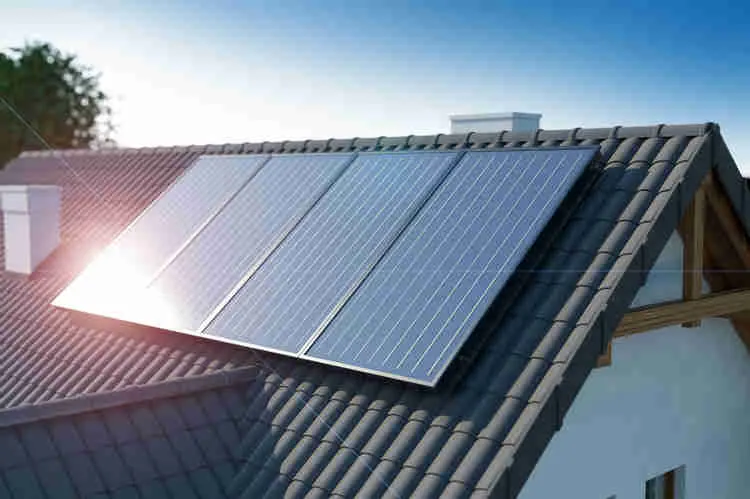
Other systems, for example, can capture solar energy through plates and provide natural lighting ensuring healthier environments with fewer bacteria and fungi.
There are endless possibilities that, if well thought out and planned, can guarantee a better quality of life.
Upcycling
Upcycling is a practice that has been gaining strength in recent years with the increase of discussion of the importance of sustainability.
Its goal is to give a new purpose to materials that would be discarded, i.e. re-signify the original product with creativity and based on a sustainable design.
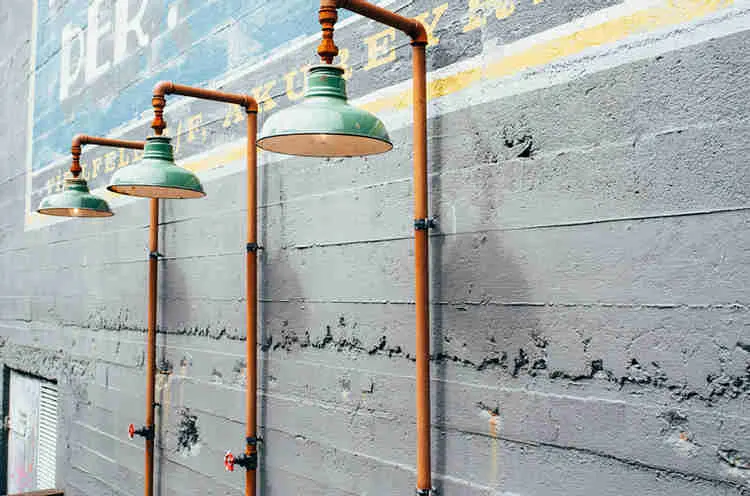
With this practice, the amount of waste in landfills and landfills is significantly reduced, and the need to exploit raw material for the generation of new products is also reduced.
In everyday life, this can be done on the furniture of your home for example. Instead of throwing away a mute servant or an old table for example, turn it to have a new purpose! Surely your home will gain a new decoration item that will completely transform the site.
A great example of this concept that has been growing a lot in the city are the so-called retrofitted buildings, old buildings that, through technology and architecture, have been revitalized with facades and more up-to-date areas.
Very characteristic in the center of São Paulo, this trend emerged as a solution to the large number of abandoned buildings and historic buildings or in poor conditions of use, preserving these heritages and giving life to the old spaces properly.
In addition to contributing to the preservation of these buildings, retrofit reduces waste by maximizing the use of existing materials and infrastructure. That is, when reused and re-adapted, these resources can generate a huge energy saving for cities.
This has made this trend stronger in recent years, because although its cost is practically the same as that of a new construction, it has several advantages, such as:
● More sustainable with smaller generation of debris;
● Greater energy saving;
● Less use of materials;
● Preserving the identity of the neighborhood in which the property is situated;
● Generation of unique and unique projects.
Have a bowl

Compounding is a biological process that transforms organic waste, such as fruit peels and leftovers of food, into organic fertilizer. This whole system happens in the so-called compost, which is nothing more than a structure for depositing this material that will be transformed into fertilizer.
All of this works very naturally: through earthworms and earth. That's what you read! By throwing organic material into the compost, earthworms will digest it by facilitating the work of microorganisms.
But what is the benefit of this process?
Its main advantage is the non-forming of methane gas, usually generated in the process of decomposition of waste and which is highly aggressive to the environment, as it is a greenhouse gas about 25 times more potent than carbon dioxide.
There are several sizes of composites that can be installed easily in any property.

Calculate the reform
Every renovation generates a huge amount of waste in landfills, so if you want to make any changes in your property, think of measures that generate the smallest amount of debris such as flooring, for example.
In addition, try to use materials that are more environmentally friendly, such as bricks and coatings that dispense burning in high temperature furnaces, or paints made of natural compounds.
Nowadays, there are several products available on the market with the same qualities at affordable prices, which will contribute to reforming your home and making it sustainable.
Invest in Ecofriendly
Finally, the term Ecofriendly can be understood as something “friendly to the environment”.
In other words, it covers any practice that does not cause social and environmental damage or has reduced impacts to a product, event, situation or equivalent posture.
Whether in food, in the purchase of a product or in the disposal of garbage as through composters, this practice covers a series of actions that contribute to a sustainable lifestyle.
Conclusion

Having a sustainable lifestyle is not something difficult, much less far from our daily lives. There are several actions that can be adopted and put into practice in our daily lives that will contribute to this goal.
If you want to adopt this lifestyle, remember all the tips we have given you throughout this text. In our blog you can still find texts about sustainability, rental, culture, tips And more.
And remember, we're always at your disposal to help you find your perfect property. Citas website and meet our community!
