

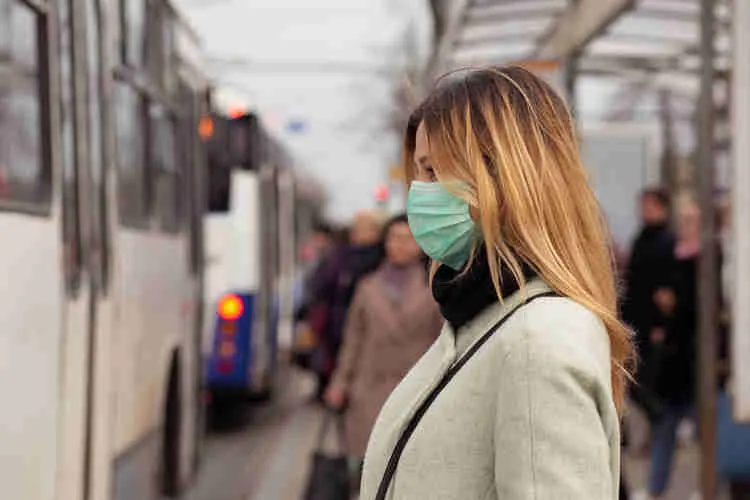
According to the Ministry of Health, Coronavirus is a large family of viruses, with several species that cause mild to severe symptoms that can lead to death.
These viruses were more common in animals, but in 2002, they underwent their first mutation that caused a death in a human being: Severe Acute Respiratory Syndrome, or S.A.R.S-CoV.
But after all, is this the same virus we're currently facing?
In fact, the outbreak we are facing was caused by a new agent of this family, the 2019-nCov. Initially identified in Wuhan, China, its spread has been extremely high throughout this year worldwide, causing its main disease: the Covid-19, called SARS-COV-2.
This occurred mainly because of their forms of transmission, which may occur from one sick person to another by close contact, or in the following situations:
● Touch or shake contaminated hands;
● Droplets of saliva;
● Sneeze;
● Cough;
● Contaminated objects or surfaces, such as mobile phones, tables, cutlery, toys, etc.
What are the symptoms?

Also according to the Ministry of Health, the main symptoms of Covid-19 are: cough; fever; flushing; sore throat; difficulty breathing; loss of smell; taste disturbance; tiredness; decreased appetite; shortness of breath and nausea.
The big problem with looking at this list of symptoms is that they can be very easily confused with other health problems, such as a cold with a flu syndrome.
In addition, according to the World Health Organization (WHO), about 80% of infected people can be asymptomatic.
Therefore, the recommendation of the official bodies is always to seek a medical evaluation in the presence of any of these symptoms. In the consultation, will be detected which infectious agent and the appropriate treatment.
It is an extremely dangerous disease, which caused social isolation to be adopted worldwide as a preventive measure against the disease until a vaccine was developed.
During these months, living in the house has become one of the main difficulties faced by many people, forced to spend the whole day with their families, their habits and differences.
Let's get a little more on this next.
What are the main challenges of living in isolation?
Since the country entered social isolation in March 2020, the closest contact with our family members has caused the problems that were previously ignored or easily solved to gain greater proportions, generating stress, fights and disagreements.
Whether by small “manias” like leaving the light on without anyone in the room, dishes accumulated in the sink, or belongings scattered around the house, the main challenges of living in isolation they are finding the best way to face and deal with these differences, which could even go unnoticed before.
After all, the main consequences of these changes affected people's health, leaving them burdened and vulnerable to exacerbated reactions that vary between nervousness, impatience and intolerance, for example.
"Keeping the balance in situations of much emotional stress depends on the psychic resources that each one has and the creation of a harmonious and careful environment inside the home," said psychoanalyst Isabel Cristina Gomes, in an interview with UOL.
In the same interview, the expert says that it is natural that there is this feeling of anxiety in homes during this period of isolation, because experiences the disappearance of many “certainties” that were part of our lives.
Because it is a moment that "awakens strong and primitive anguish within us", the psychoanalyst says that the first step to improve coexistence in this isolation and reduce disagreements is to accept the differences of others.
In theory it may be simple, but for many it may be difficult to put into practice. But don’t worry, because we have separated some tips that will help them improve living in the house.
But before that, let's understand a little more about this new context in which we are living.
Epidemic of loneliness: what is it?

One of the ways to combat the spread of the COVID19 pandemic was the establishment of lockdowns. In addition to causing economic difficulties due to the slowdown of the economy, lockdown also has a relevant impact on the mental health of the population, which has difficulty living with social distancing.
But long before the COVID was mentioned, researchers had already indicated that loneliness was increasingly bringing adverse effects to the population and had already created the term “epidemic of loneliness”.
But what is loneliness?
According to Stephanie Cacioppo, director of the Brain Dynamics Laboratory of the School of Medicine Pritzker, University of Chicago (USA), loneliness can be defined as “the discrepancy between what you want from your relationships and what you actually have,” she said in interview to the World HR.
In addition, senior scientist Louise Hawkley at the University of Chicago explains that all people have a need for acceptance and for being incorporated and connected into a social network, and when this does not happen, we can feel serious consequences for our physical and mental health.
In other words, loneliness is a feeling of non-belonging, when people feel unable to create bonds or identify with others, creating problems of relationships and connection.
According to experts, this is a complex feeling that can manifest at any age, which has led to the subject of several research by scientists around the world so that they could better understand its causes and consequences in our society.
In the United Kingdom for example, the Jo Cox Commission report on Lonelinesss published in 2018, 9 million British people declared themselves lonely, of a total population of 65.6 million. At the time, former Prime Minister Theresa May described the situation as a “sad reality of modern life, which affects people of all ages”.
This phenomenon has been seen in several countries in recent years. According to official surveys conducted by each region, the percentage of people who felt lonely were as follows: 7% in the Europe (equivalent to 30 million people); 27.6% in Australia; 23% in Canada and 28% in China.
These studies have caused many specialists to characterize the scenario in which we are living as if it were an “epidemic of loneliness”. After all, the need for social isolation to contain the pandemic caused the number of people who feel lonely to grow in several countries, accelerating the “contagion” of this epidemic and, consequently, bringing consequences such as health problems and even for living with friends and family.
As an example, some of the most common symptoms that loneliness can cause are difficulties to sleep and feel more stressed. This can harm not only your health, but also affect the way it will deal with other people you live with in your home or even in your work relationships.
It is therefore important to find solutions to deal with this situation in the best possible way, mitigating the problems that may arise from this pandemic and generating a better environment of coexistence for all.
We've separated some special tips that can help you with this. Check out the next topic!
How to improve living together in quarantine?

Quarantine living is a period of great difficulties for many people, but it is possible to make it pleasant and reduce the wear of fights and stress among family members through some daily habits.
Everyone needs to be willing to contribute to creating a light and pleasant atmosphere inside the house. To achieve this, see some valuable tips that can contribute:
● Respect each other’s privacy;
● Have moments of fun individually and as a family;
● Create a routine;
● Share household chores;
● Exercise tolerance;
● Take it easy in moments of disagreement.
To help them, let's explain each of these items below.
Respect each other's privacy

Respecting the privacy of each member within the home is the first step towards reducing the quarrels and quarrels of their home. After all, it is not because you are obliged to be in the same environment 100% of the time, that you need to be together at all times.
Everyone should have their space and their moment of privacy, either to perform some obligation as work or study, or simply to have a leisure time and perform some hobby like reading, watching a series or playing video games.
Give your family a few hours alone, and it will help them to fulfill their duties, relax and unstress, avoiding unnecessary fights.
Have moments of fun individually and as a family
As much as we are in a period of isolation, that does not mean that we have to take this concept literally into practice.
Since we're in the house 24 hours a day, why not separate some time from our day to have fun?
Whether individually as mentioned in the topic above or together with our family, creating moments of relaxation and leisure are great to brighten the atmosphere at home, helping to find ways to laugh and chat.
Even though there are great differences in age and taste, such as having children and elderly at home for example, there are several game options that can please all tastes, such as:
● Board games;
● Films and series;
● Cooking in a group;
● Video Games.
Create a Routine

We all had a completely different routine before the pandemic, and with the arrival of the Coronavirus, our day-to-day has changed completely.
"One of the first effects of quarantine is attentional disorientation. One feels more confused, less focused, much more tired. She thinks she's gonna work at home and she's gonna get some rest, but that's not what happens. Because a series of appeasers we have at work, such as the coffee break or the conversation with the colleague, are suspended," points out the psychoanalyst Christian Ingo Lenz Dunker in an interview with UOL.
According to the specialist, reestablishing a new routine in this new scenario can contribute and contribute much to our mental health, and especially to the coexistence with the members of his family.
In other words, creating daily habits helps to reduce stress and manage anxiety in this time of so many uncertainties, and may even contribute to feel more focused and productive in their tasks.
But how can this be done in practice?
Establish actions such as having set times to wake up, eat, work and dedicate yourself to leisure activities, for example. Having a schedule will also help you have a greater sense of control over your day and responsibilities, relieving anxiety and, consequently, stress inside the home.
A great example that will help you in this task is to create an exclusive space in your home so you can work. Home office is already the reality of many professionals, and for them to be able to concentrate, they need to work in a space where they feel comfortable and, above all, have no distractions or interruptions like noises.
Share household tasks

Overwork of household chores is one of the biggest reasons for discussions within the home, especially during this pandemic. After all, as we are all the time in our homes, the amount of dirt, dishes to wash and mess has increased, and maintaining order has become an even greater task.
So it is important to share household chores so that no one feels overwhelmed and can keep the house in order.
Separate according to each person’s preferences or availability. Also, set free days and hours for these tasks to be done in such a way that they do not interfere during someone’s work hours.
In this way, your home will remain clean and in order, with the contribution of all.
Exercise tolerance

As much as everyone at home adopts all the above practices, it is normal that someday a person is feeling more stressed and ends up fighting with someone.
Whether it's work problems, worries, or simply not being on a good day, be understanding with each other and try to bring some situations to avoid unnecessary fights or climates.
But especially if you are going through a bad day, try to be clear with your family about what you are feeling. Be frank and direct, and try not to take your anger or frustrations out on others.
This is a constant tolerance exercise, but it will certainly help to maintain a good relationship with everyone during this period.
♪ Take it easy in moments of disagreement ♪
This tip works as a complement to the previous topic: at any time of disagreement, it is important to try to keep calm to the fullest to deal with them in a balanced way.
The best way to resolve these moments is through dialogue. Try to understand why he is acting in that particular way, and especially the way you are dealing with the situation.
This will make all the difference to solve the problem and, mainly, to avoid possible future discussions. Therefore, always try to keep calm in disagreements, and talk without aggressiveness to solve them.
Conclusion
Maintaining a good relationship during this period of isolation is not easy. We were forced to readapt our routines and deal with a completely different reality, full of unforeseen events.
To help them in this scenario, in this text we have given the best tips of actions that can be adopted inside the house that will contribute to brighten the climate and, above all, to provide a good relationship with all their families.
If you liked this text, continue your visit on our blog and take a look at our other articles!
