

What is the right procedure for the tenant to follow when returning a rented property?
Property rentals have become increasingly popular among people of different ages. For young people, as an opportunity to leave the parents' house without having to spend a lot of money on the dwelling.
For adults, an excellent option for those who travel a lot at work and need to constantly move around. Even for many elderly people, who seek an alternative lifestyle and more interaction as in the cohousings.
The benefits of rent an apartment But, like the purchase of a property, its return also has its most bureaucratic parts that must be analyzed very carefully so that none of the parties are harmed.
At this time, some points should be taken into consideration. Among them, some of the most important are the fulfillment of the notice and the exit survey.
This survey covers a huge amount of items that many people are unaware of! As an example, did you know that it can contain an output rate that covers any costs of wear and cleaning?
If you do not pay attention to these details, you may end up being charged with various responsibilities that are provided for in the Inquiry Act. We do not want you to have problems returning your rental property. So we are here to help you!
In this text, we will explain everything you need to know about this return without surprises. See the topics that will be addressed:
- When returning a rented property, be programmed;
- First step to return a rented property: notify 30 days in advance;
- have in hand the contract and the Input Survey Laudo when returning the rented property;
- New painting: can you color?
- I've made improvements to the apartment, can I ask for a refund when returning a rented property?
- I damaged the floor.
- lamps;
- leaks and cloggings;
- Do I have to clean up to deliver a rental property?
- My contract provides for an exit fee when returning rented property: how does it work?
Come on!
When returning a rented property, plan
The main rule for every tenant who returns a rented property is to prepare himself, especially so that he doesn't have any financial surprises, having to pay for expenses he didn't expect.
All real estate rentals follow the rules laid down by the Inquilinato law. It defines all the rules and responsibilities of the tenant and the owner during the process.
With it, none of the parties are harmed. Their rules serve to ensure that the rental of the property is as harmonious as possible, so that the tenant has an excellent experience and the owner is not financially harmed.
Among all the rules defined by the Law are those involving the return of the property. Do not think it is simple, just giving the keys of the site to the owner when the deadline signed in the rental contract Finish.
It's a lot more complex than that. The tenant should worry about a series of procedures such as, for example, complying with the notice and ensuring that the property is in the same state in which it was delivered.
There are many details, but don't worry! Let's explain the main ones so you're ready. Check it out.
First step to return a rented property: notify 30 days in advance

The notice is one of the main obligations that every tenant must follow in the rental of real estate, according to the Inquilinato Law.
It represents a statement in advance if you wish to leave the site before the lease agreement is terminated. Its purpose is mainly to help the owner prepare for his departure, so that he can find someone else to rent the apartment.
Every standard contract has the notice clause that is usually set in 30 days at least. Now, if the tenant does not respect that time, he will have to pay with a fine for early departure, whose value is also defined in advance in the signing of the contract.
This charge is permitted by the Inquiry Act and usually corresponds to a month's rent. In addition to other charges that may be included depending on the case.
As much as the fine is legal, it is not ideal to return a rented property to any of the parties. For the tenant, you will have another expense in this process. For the owner, you will not have a space of time to find another resident.
Thus, the most recommended is to comply with this notice so that no one is harmed.
Keep in hand the contract and the Laudo Input Survey when returning the rented property
Before signing the rental contract, one of the main procedures followed is the survey. A qualified professional is hired to evaluate the property and find that it is in perfect housing conditions.
In this report, a number of items must be expressed. From the quality of the painting of the environment to the state of furnitureEverything must be detailed and attached to the contract.
When returning a rented property, an expert must also conduct a new survey before the key delivery. Here, the goal is to find out that the property will be returned in the same state as it was delivered. This, including everything that was detailed in the document as painting and the quality of furniture.
Both the input and exit surveys are extremely important for the rental process. Mostly, so that no one is charged for something improper. Or even, for the proper repairs so that the site can be relocated.
After all, it is very common to have problems over time. Constant use can, for example, wear the floor, damage lamps, or even major problems involving plumbing or leaks.
Each of these situations must be properly solved before the return of the property. In the next topics, we separate the main situations that may occur so that you know how to deal with each of them.
New painting: can any color?
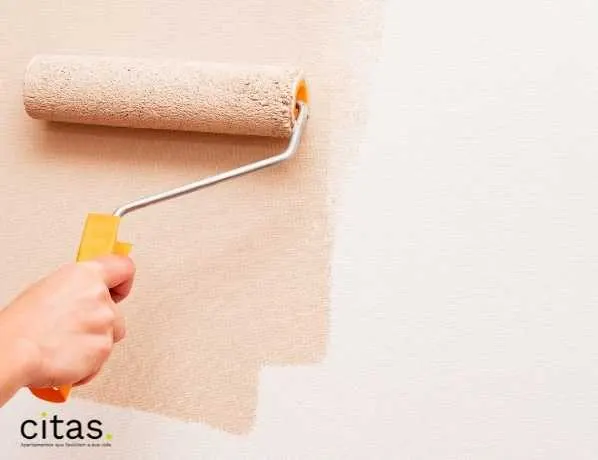
It's very common for tenants Paint the apartment of another color during your stay. Whether because the ink began to peel with use, yellowish or worn.
As much as it is allowed, it is important to highlight that this is only possible if it is agreed with the owner.
So, if the tenant wishes to paint his space a new color, he should notify in advance and see if the lessor accepts the offer.
But shouldn't the property be returned with the same characteristics as it was delivered to?
Theoretically, yes. However, there are exceptions as in this case the owner agrees to paint the place another color. Or even, if at the time of returning, the tenant does not find the same original color and suggest using another similar color.
The Inquiry Law defines the guidelines to be followed in the rental of a property. But even so, some things can be agreed differently, provided both are aware and without anyone being harmed.
I've made improvements to the apartment, can I ask for a refund when returning a rented property?

Reforms and benefactories are very controversial issues in the rental of real estate. The Inquilinato Law is clear about the return of the site in the same state in which it was delivered. But what if some changes in the environment are necessary?
The answer is different depending on the case. In situations where there is any problem or damage that has not been caused by the tenant, the owner must reform it so that the tenant is not harmed in his dwelling.
The benefactories, in turn, are not considered necessary for your stay. In other words, they are not defects that needed to be repaired as problems in plumbing or mold.
The expenses, in this case, are the tenant's total responsibility. But many wonder if the costs used can be requested as a refund. Again, the answer will vary.
Many improvements may be refundable, provided they are agreed in advance between the parties. In some cases, the owner may consider such a change as something really positive for the property, agreeing to pay for the amount spent.
Even if you do not refund the total amount, you can return part of the money invested. Everything can be agreed, as long as the improvement is notified in advance.
Otherwise, the tenant will have to re-remodel the place to stay in the same state he was originally in, so he spends even more money for something that will be temporary.
I damaged the floor.
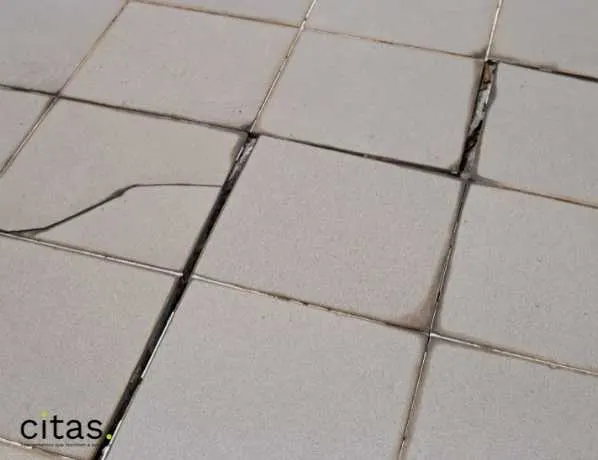
Damage to the floor is a more common problem than many people imagine.
Most of the time, it occurs by wear and tear over time, which can damage the material used to either step or drag furniture. Or even, it can occur by the tenant’s own misuse.
Whatever the case, repair for floor damage must be repaired before returning a rented property. What will vary is who will be responsible for carrying that cost.
If it has been caused by the natural wear of time, the responsibility is entirely the owner. Now, if it has been damaged by misuse, the tenant will have to pay for the repair.
That's one more reason why the exit survey is so important, she'll be able to verify if the floor was damaged by constant use or by the tenant, and especially in identifying the problem before someone else goes to live on the scene and has to cope with this problem.
Luminaries
As with all other furniture, when returning a rented property, the lamps They must also be delivered in perfect condition.
If they have been broken by the tenant, he is obliged to reimpose them according to the Inquiry Law. No object, whatever, must be missing at the time of return.
Even if you don't find a lamp identical to the one you were in, you can replace it with a similar one.
Leaks and cloggings
Leak problems and cloggings are very common in all the property. If they occur, the owner is most often the big responsible for carrying out his repair.
That is because very difficult, the tenant will have a misuse that will cause a leak or clogging. As much as the tenant’s responsibility is, it is very common to see cases where the tenant stops informing him about the problem. And often, he finds out a long time later.
Your non-warning may bring serious damage to the property over time, causing a severe damage to the owner economically. If this situation occurs and, it is proven that the problem arose while the tenant was still living on the site and did not warn him, he may be held responsible for the damage.
It may be a simple problem, but if it is not solved, it may spread and cause immense damage to the property. Besides the cost of repairing it being even greater, the owner will take longer to be able to relocate the apartment in perfect conditions of use.
Do I have to clean up to deliver a rental property?
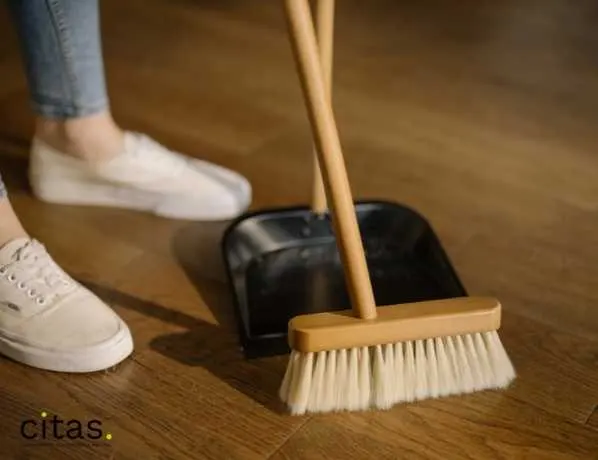
Theoretically, yes. After all, every tenant will receive the property clean for his stay. Then, when returning a rented property, he must also clean it up for delivery in order.
Many prefer to clean the place themselves. However, an alternative for those who are not fans of a cleaning machine is to hire people for this task. Normally, the service will include cleaning floors, glass and furniture. But, it may vary according to the needs of each environment and the level of dirt.
In the case of a day-care worker, the amount charged may vary from R$100.00 to R$500.00, depending on the size of the property.
Another option for those who do not want to have work looking for a professional to perform this cleaning, is to wake up with the owner so that he himself pays for cleaning.
In this case, he may charge a fee in his exit contract, since he will have to bear a cost that, theoretically, is the tenant's responsibility.
My contract provides for an exit fee when returning rented property: how does it work?
Many owners usually include an exit fee in the rental contract. It is not mandatory to be included in this document, but is permitted by law. Therefore, it is important that every tenant should be aware of whether that fee is included and, to what it refers.
As an example, it may represent the cleaning fee, as mentioned above, so that the tenant does not have to pay for this service. Also, it may be related to the advance departure of the tenant, if it does not comply with the 30-day notice.
Finally, a third common example is to be used for possible damage to furniture if they are not repaired before returning the property. Thus, the owner will not be harmed having to bear a cost per tenant carelessness.
The exit fee may have several purposes, but whatever it is, it must be expressed in the rental contract. The tenant must be clear about what may be charged, so that there is no misunderstanding.
How and who do I give the keys to when I return a rented property?
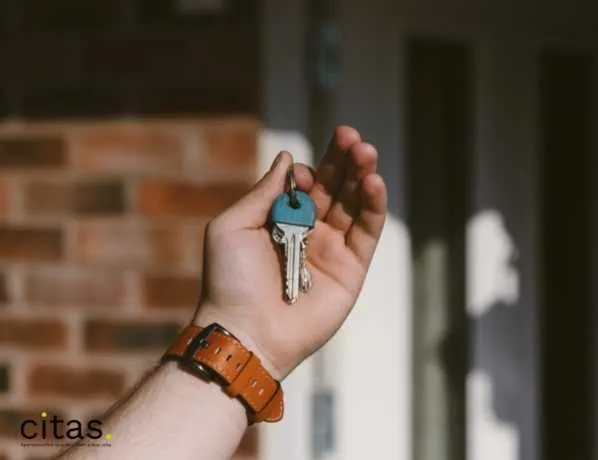
When returning a rented property, the keys must be delivered, as a priority, to the owner himself. If not possible, they must be delivered to the real estate agent responsible for the rental or, even, to the landlord's mandate.
All these people who may receive the keys must also be specified in the rental contract. Thus, if the owner is unavailable for some reason, the tenant will know who to turn to so that he can return the rented property.
Conclusion
When returning a rented property, every tenant must pay attention to the rules mentioned in this text so that he has no problem or disagreement with the owner or real estate property.
After all, everyone has their duties and responsibilities in a real estate rental, which must be respected and followed in accordance with the Inquilinato Law.
In our blogWe have other complete texts on the rental of real estate. From the most technical to the most bureaucratic parts of this process, to some with tips and experiences on shared housing, and more.
Take a look and share this text on social networks.
