

I am a student of architecture and urbanism at USP and joined Citas in late 2021. I decided to share with you a little of what I have learned, because I believe that architecture, being economically viable and inclusive, can be an important tool to realize Social Impact on housing.
O FICA it is a fund that captures resources through donations, it makes the purchase of real estate in central regions served as infrastructure and rents to families with income from 2 to 3 minimum wages. My first contact with the fund was in 2021, when I knew that they were promoting a workshop focused on housing of social impact .
The workshop called Project Small and had the objective of inviting undergraduate students to elaborate proposals for occupation and furniture for one of the properties purchased by FICA.
The opportunities and gaps filled by FICA
The property chosen is located in the neighborhood Bom Retiro, central region of the capital of São Paulo and traditionally a region occupied by immigrants with large amounts of sewing services, clothing sale, textile products and sewing machines.
The family contemplated by the property is of Bolivian origin and as many foreigners they faced difficulties to rent a property. Such difficulties occur due to the low confidence that tenants have in foreigners in paying rents, so many times an additional number of documents and values are required from immigrants so that they can rent a property.
A little of my international experience
What attracted me most to this workshop was precisely the fact that it contemplated foreign people, because on several occasions I tried to live an experience abroad, and so I understood the various impasses that an immigrant has in a foreign country.
In 2020 I was in a process of conducting an exchange for England, but on account of the pandemic I was unable to make the trip. Nevertheless, even within Brazil I try to live the experience of an exchange. So, through a Facebook Architecture group I met a Nigerian architect who just as I was preparing to conduct an exchange, only for Brazil. I confess that all the interest and effort he was making to come to Brazil moved me a lot, because I was concentrating all my interest and effort on leaving him.
I believe that a way to better understand different architectural proposals is necessary to know other productions already performed.
The Tiny House Workshop
From this experience I saw how much a country like Brazil is the hope of a better life for many people from other countries, and this was the search that the Bolivian family had for staying in São Paulo, and all this insight was what made me carry out the workshop.
And for her realization, we had the incredible collaboration of German architect Van Bo Le-Mentzel who through the Tiny Houses style could bring a great repertoire of occupation of small residential spaces.
By the way, this video of him about tiny houses is fantastic! It's worth stopping 15 minutes to watch!
A remarkable contribution during the workshop were the suggestions of use he made on the corridor of the house. This corridor occupied a relevant portion of the property area, so he suggested that this corridor be diluted with furniture and forms of occupation
The sketches of the works were made within the Miro platform, below a print of the region of the house where from the orientation of the architect the region the presence of the corridor was stronger and the second version in which the table contributes to a better use of the environment.
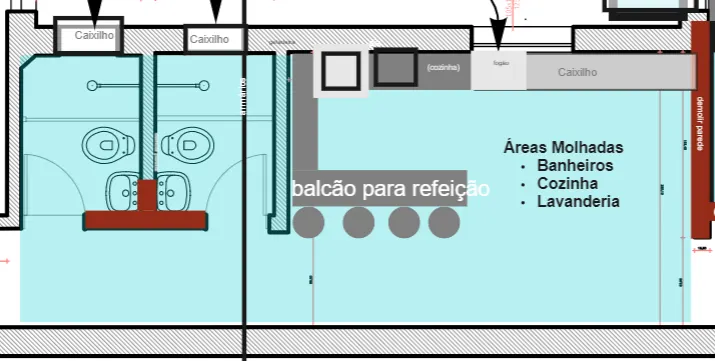
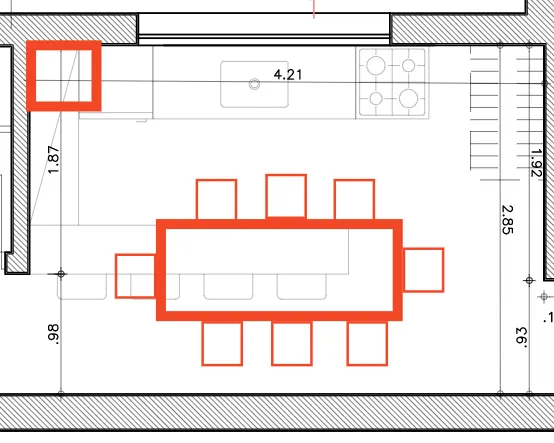
The first meeting of the workshop took place in the People's House, the site of various social and cooperative activities happen.
The profile of people benefiting from FICA
Then we know the work space of the members of the immigrant group. We talked to them about the process that led them to the immigration from Bolivia to Brazil, the arrival in the neighborhood of Bom Retiro, the work with sewing, family life, the desire to have a home and their experience with FICA.
They were of Bolivian origin and did not want to give much details about their place of origin, because they said they suffered a lot there. Brazil became an opportunity for them to live a better life, and so the neighborhood of Bom Retiro was a very strong place for their affective memory.
On the other hand, immigrants face a number of difficulties for the rental of real estate and the fact that they work at home with sewing the process became even more difficult, with the possible sounds of machines and people working the reasons for the negative.
Needs and products generated in the workshop
We went to visit the property purchased by the Stay Fund. When arriving on site we saw that the property is located on a top floor of a leftover, with five rooms, a main corridor and two bathrooms counting 83m2 of area. The house would be occupied by a family of 7 people: an adult couple with two children, an elderly couple and a single man with 11.8m2 per person.
It was in this workshop that I met Citas. The company's talk showed me that a private company can, yes, have activities that generate social impact as a result of its work and still generate profit. This made me believe again in my search for entrepreneurship and the social impact that can be generated from it.
The results obtained during the workshop are as follows: the project developed by me and my partner, Pedro Lins, and the illusions also made by him.
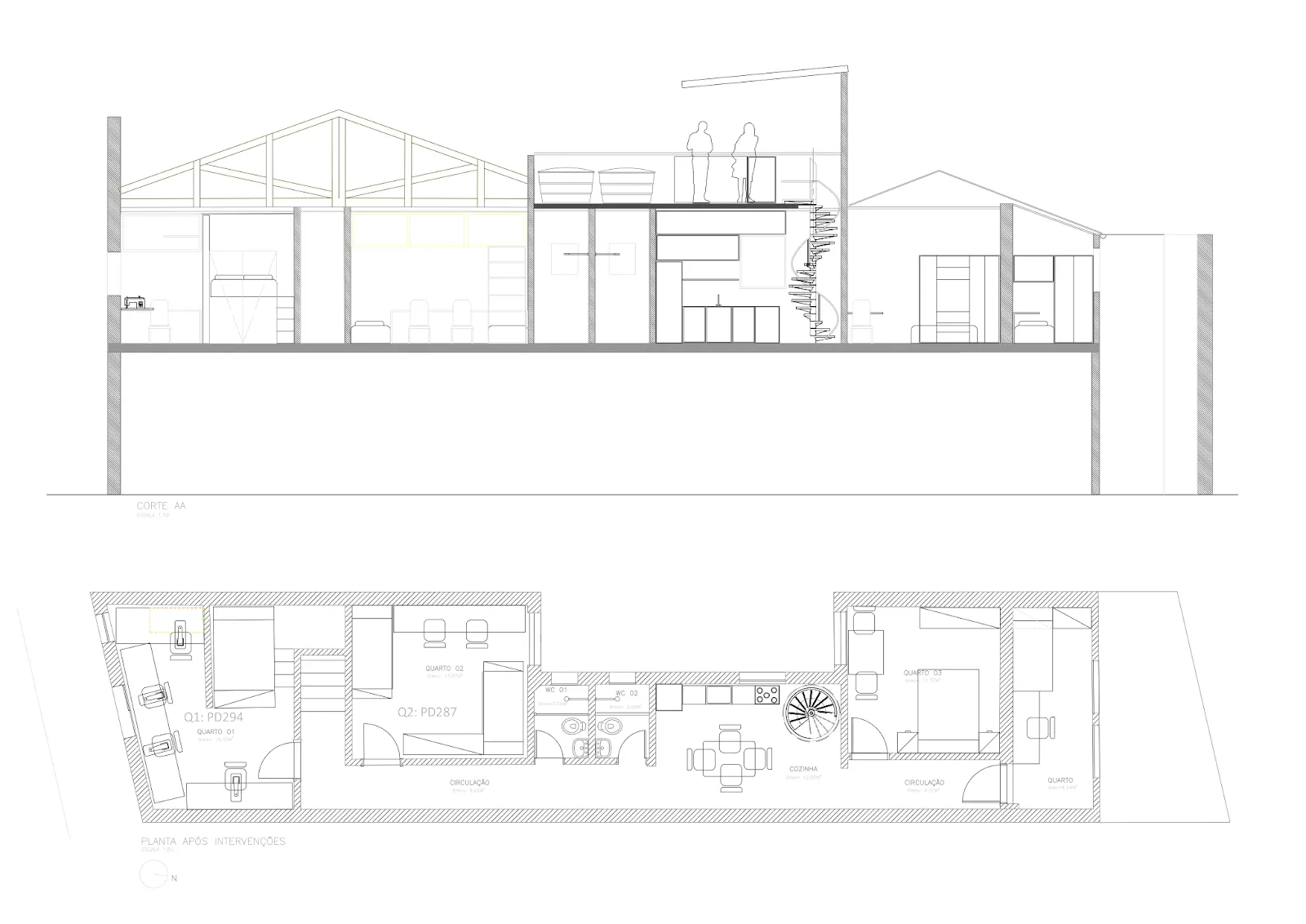
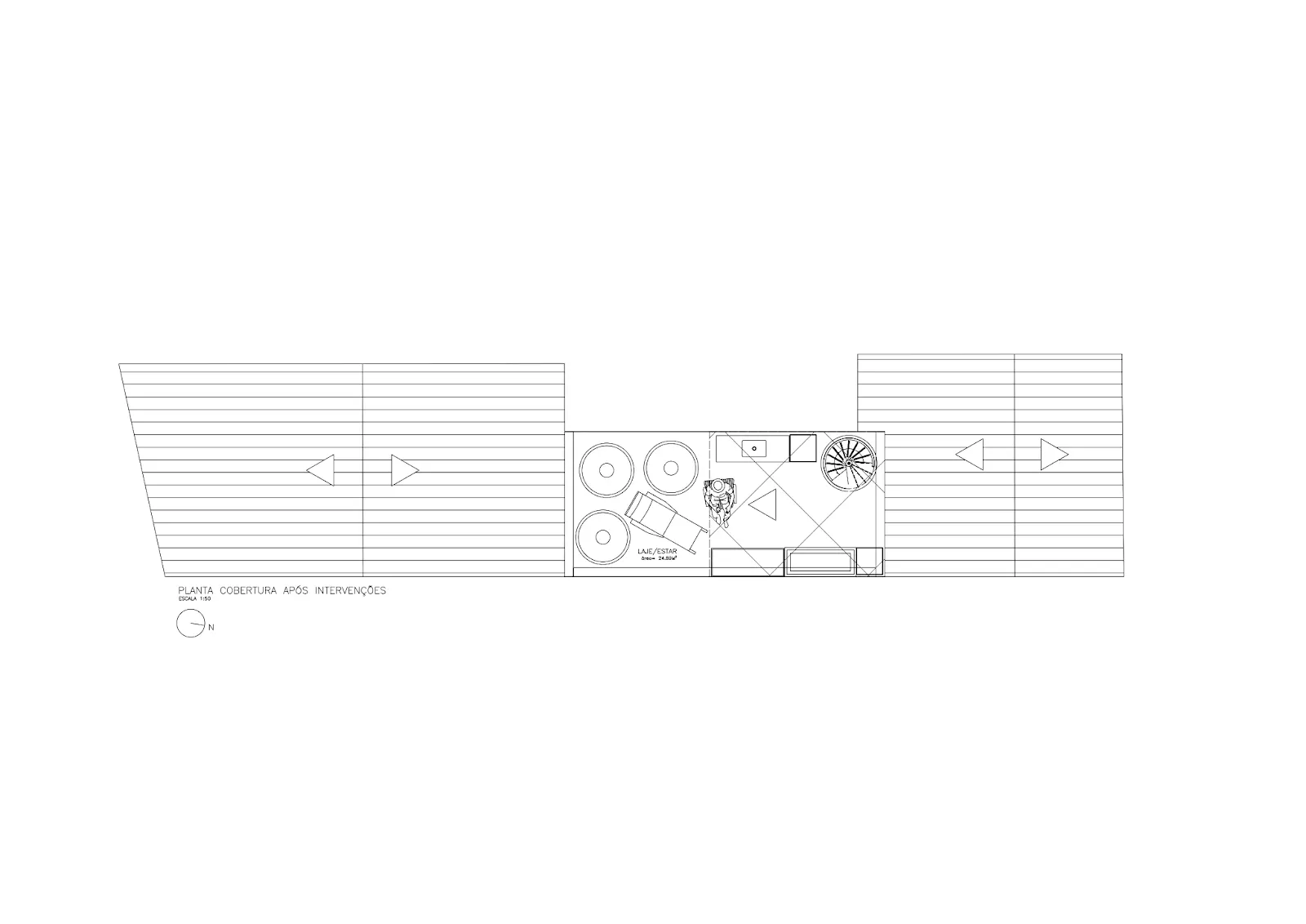
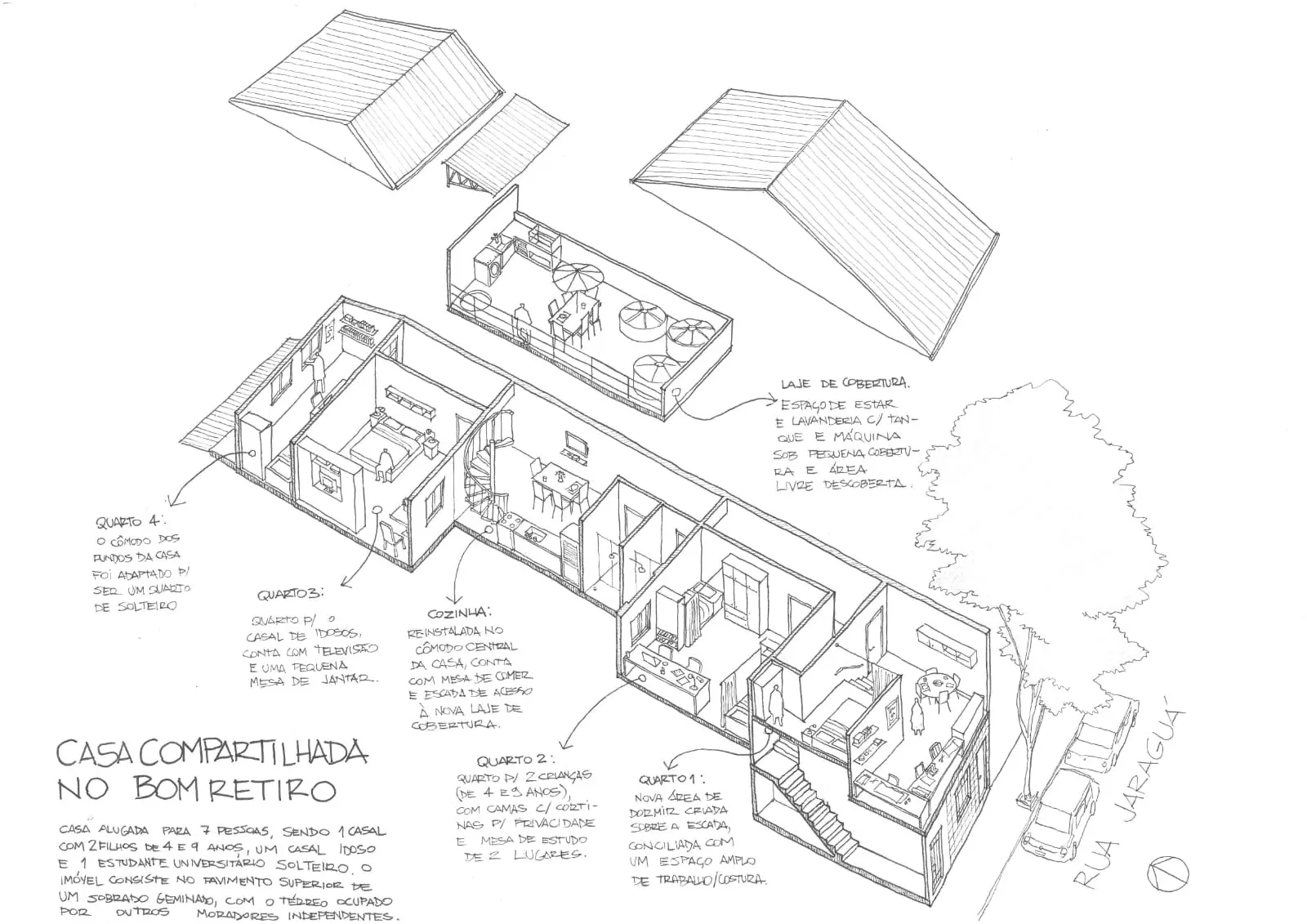
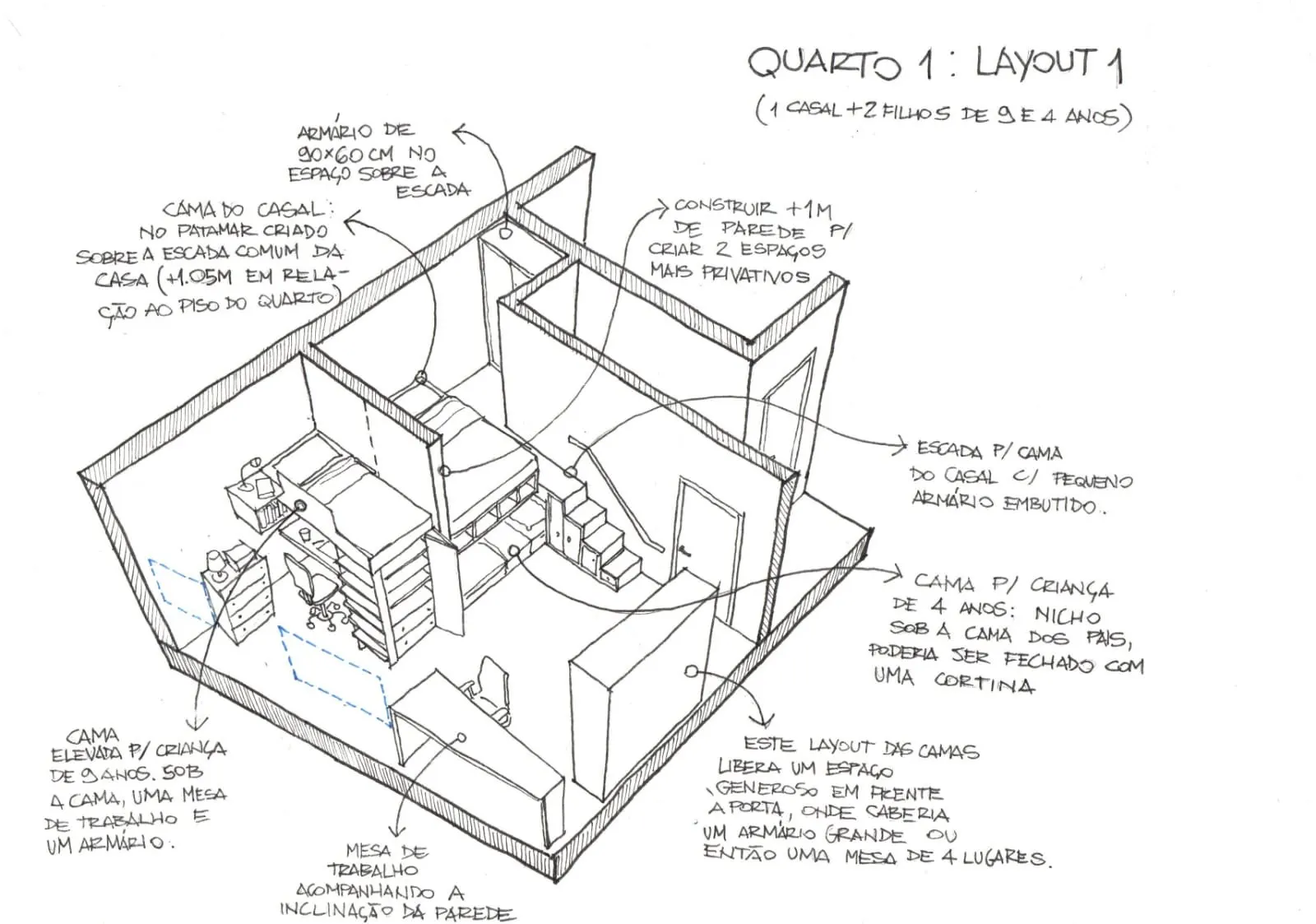
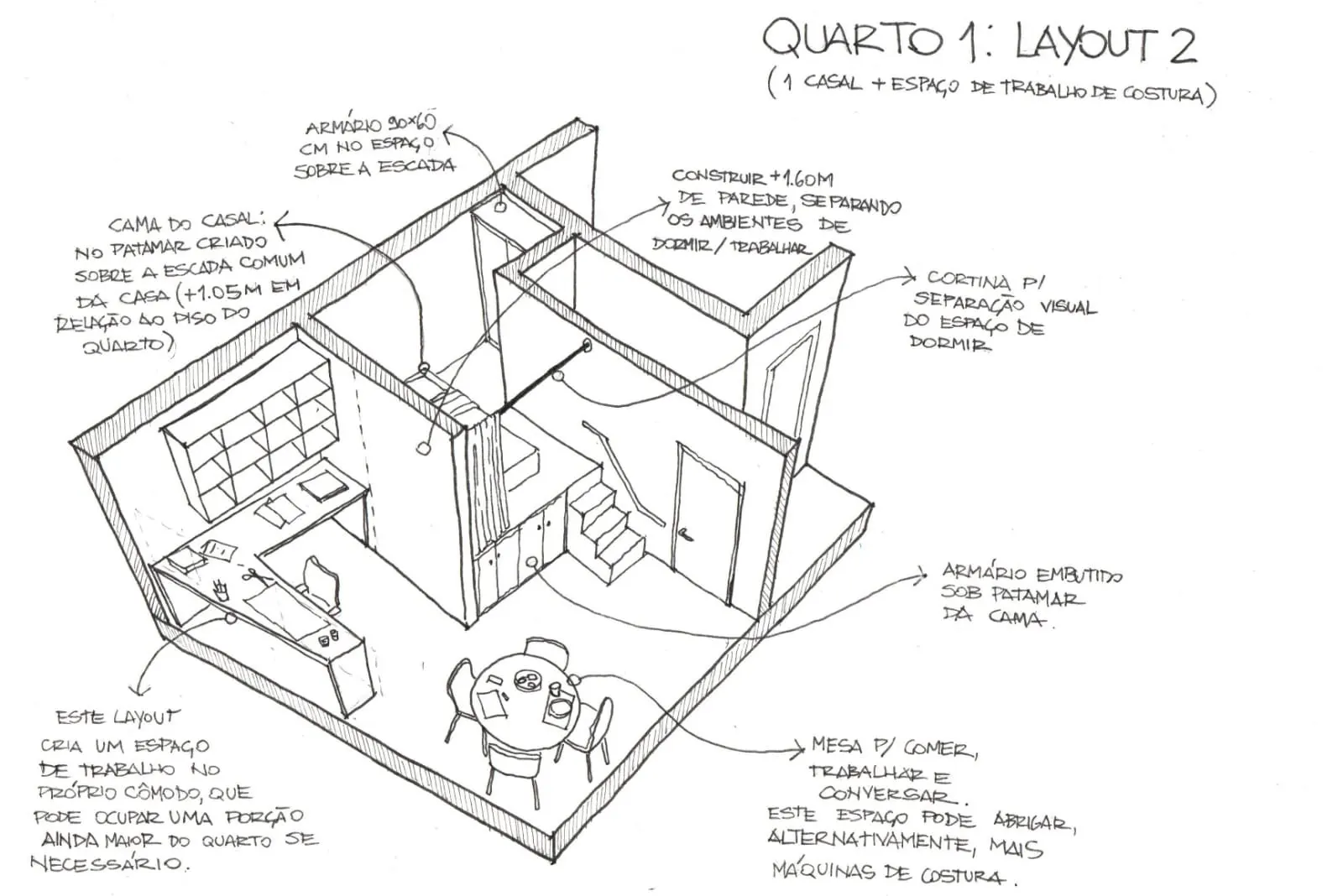
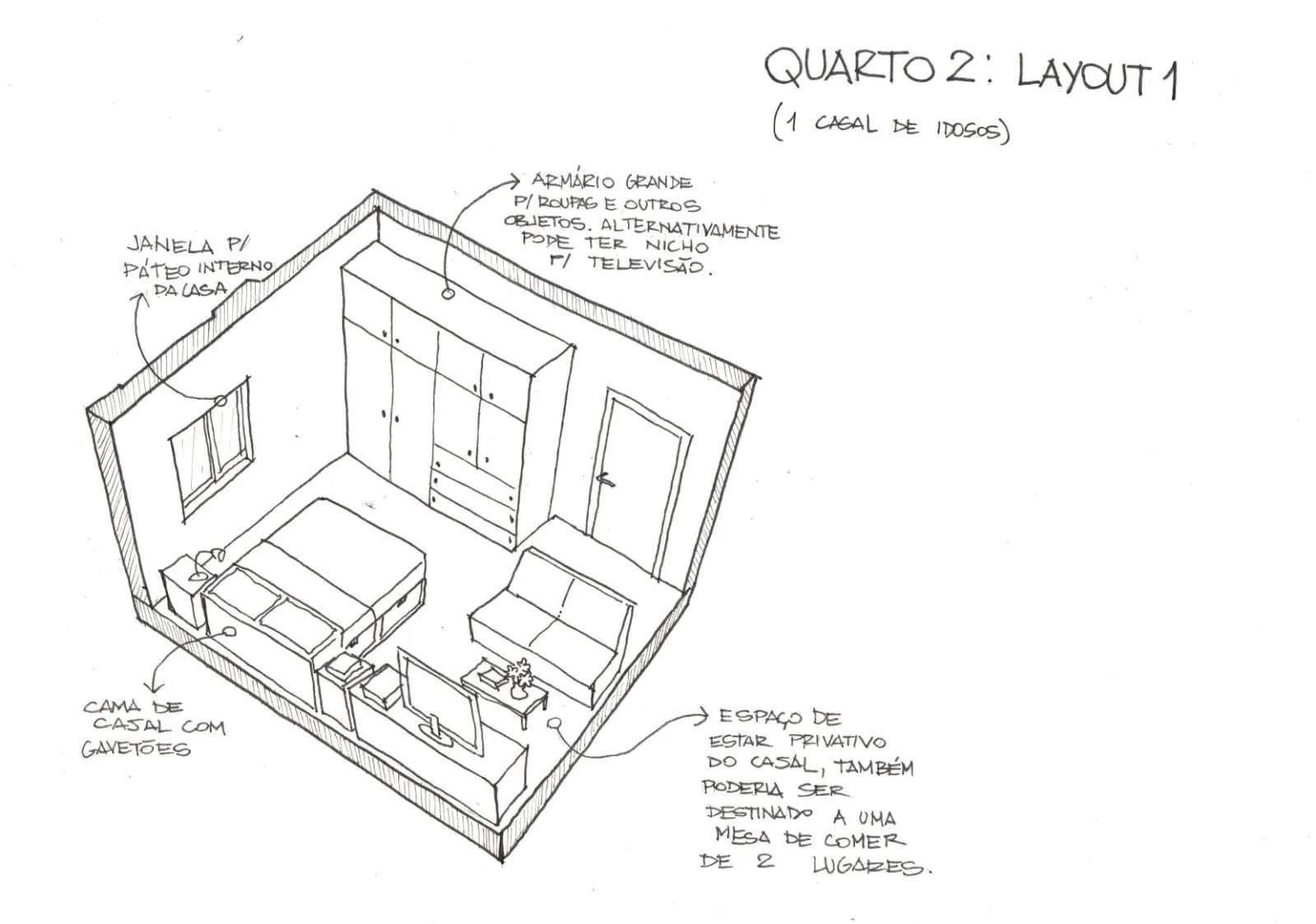
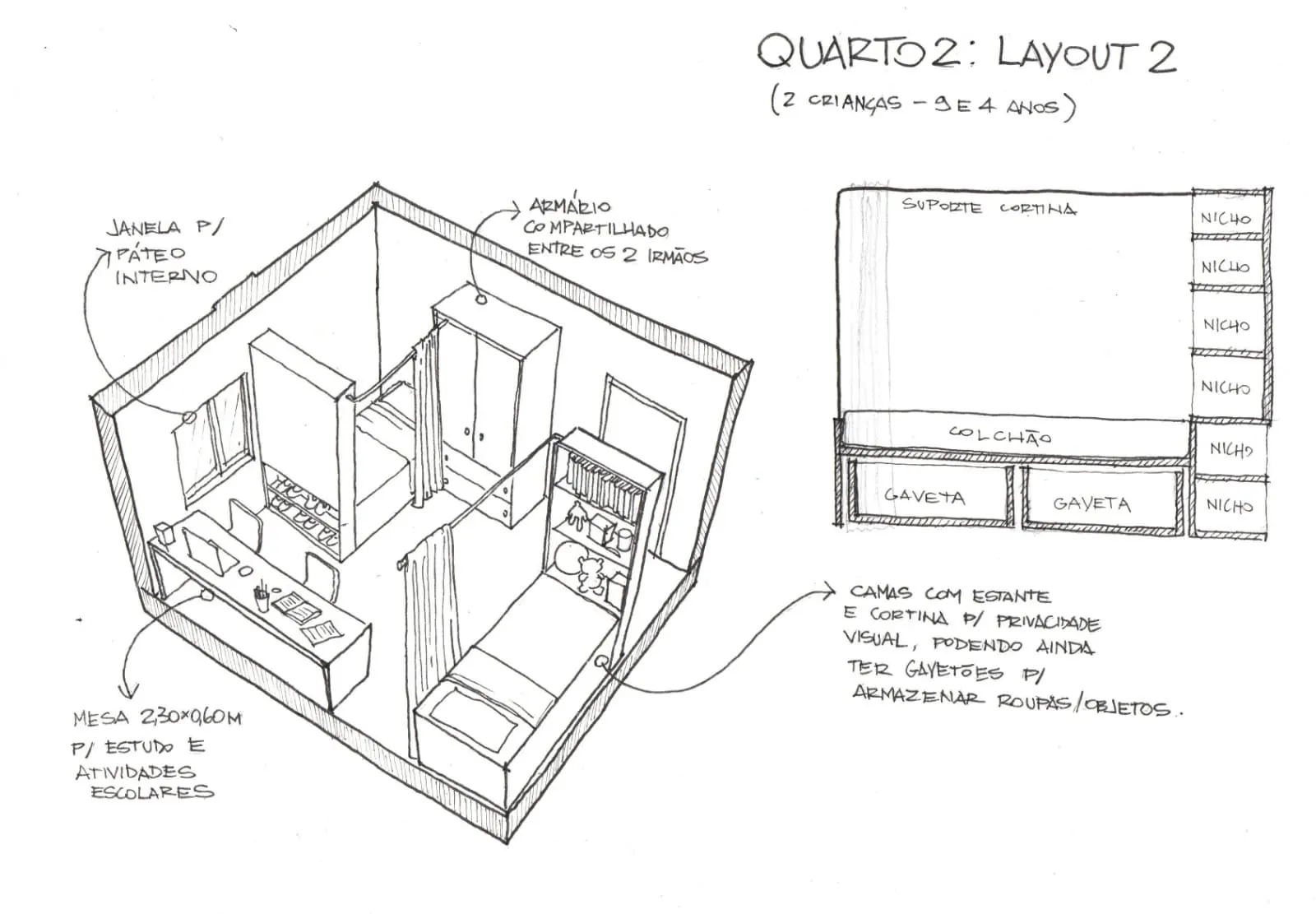
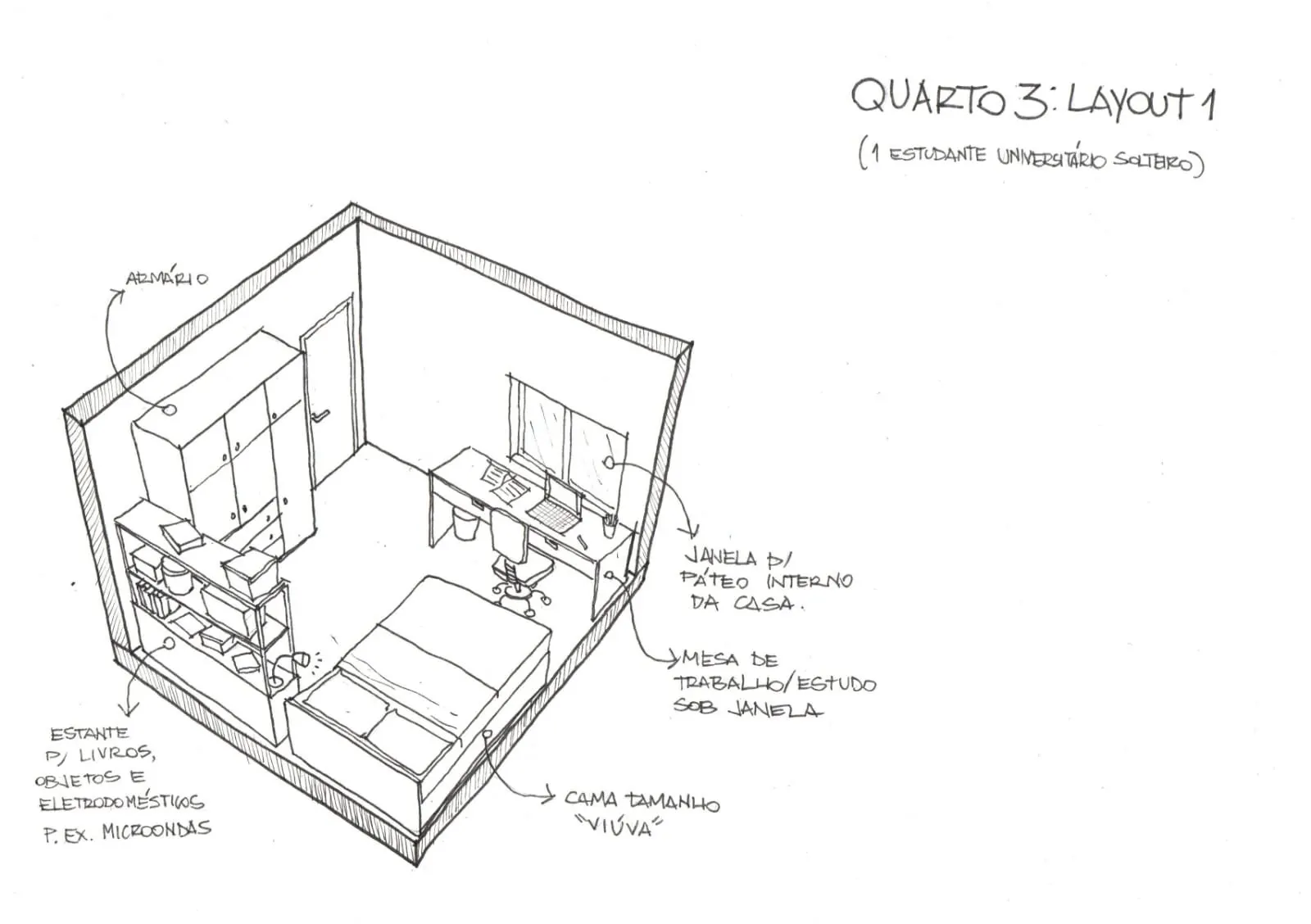
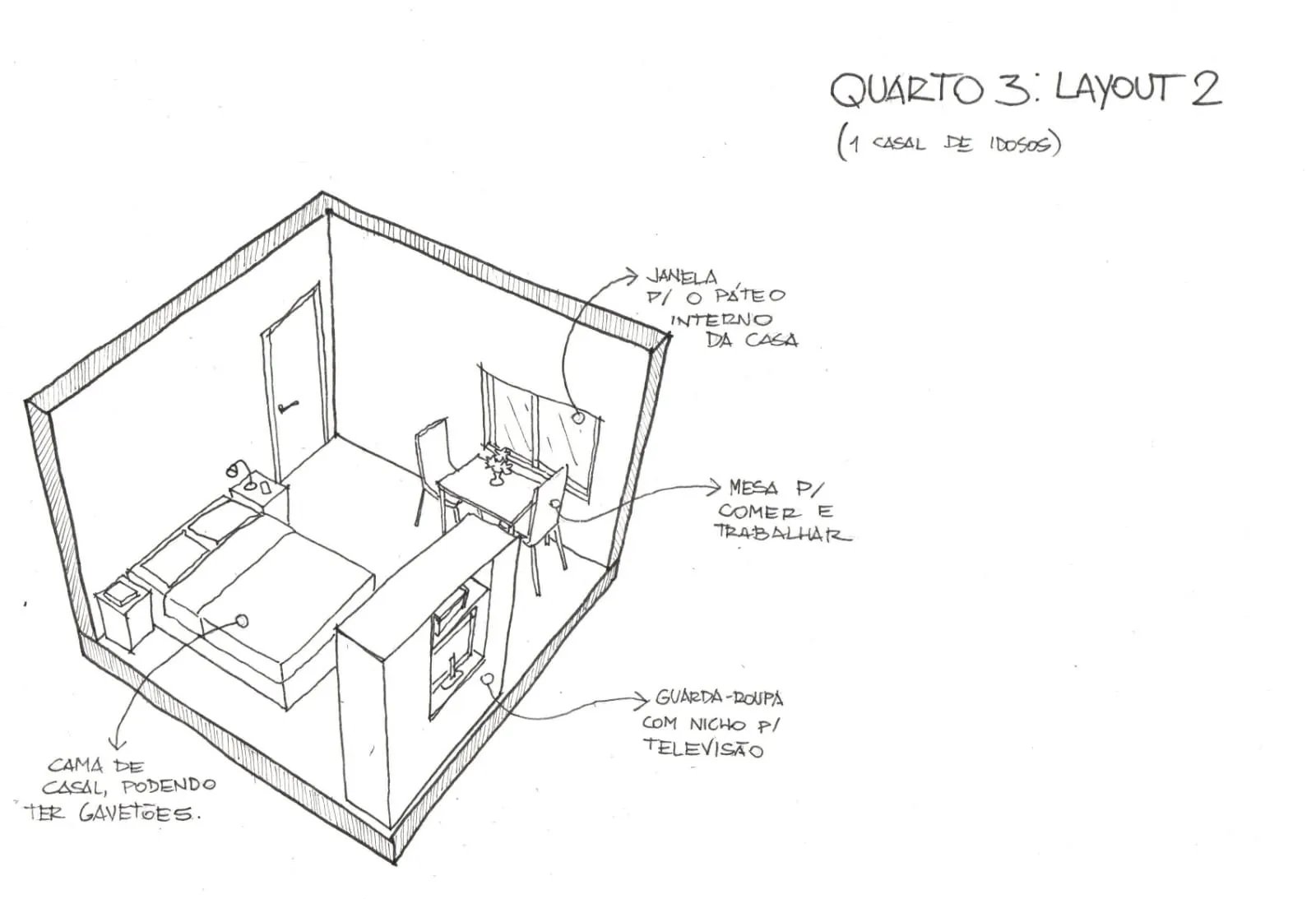
Social Impact Foldings in Housing
Despite the good ideas raised, unfortunately few could be actually executed. The family needed to move as soon as possible to the place; and both the FICA and the family had limited resources for the adaptation of the property, and it was not possible to carry out any more structural reform of occupation of the areas at that time.
I believe that contact with housing production with social impact made by different types of organization was the most impacted. I understood that from a common goal, to offer more quality housing, it is possible to act in many ways.
