

São Paulo is, among other things, the cultural capital of Brazil: not only for its hundreds of museums, cinemas , stages, cultural centres and leisure spacesBut because it's a open museum of urban art. In the midst of hasty routine and chaotic traffic, it is possible to see examples of what is called urban art from graffiti of famous artists to unknown artists who stand out for creativity, passing by murals of adhesives and lick-lambes that you have surely seen, the walls of São Paulo are a space of expression for all tastes.
We're in love with this town, especially the center of São Paulo - that has been considered one of the best neighborhoods in the world! In this text you can still know the benefits of living in the center from the city. All this culture in the streets proves that the center is an open museum of urban art in São Paulo, and it is just one of the things that nourish this passion: street art does not need time, space, or recognition to happen, it just needs the street. It's a free expression, so it happens in the most diverse places, often by anonymous artists.
We have separated some examples of what makes the city an open museum of urban art, and some examples of what you can see through the streets of the city, decorating daily paths of millions of people. Have you, who is São Paulo or not, stopped to notice some of these famous works?
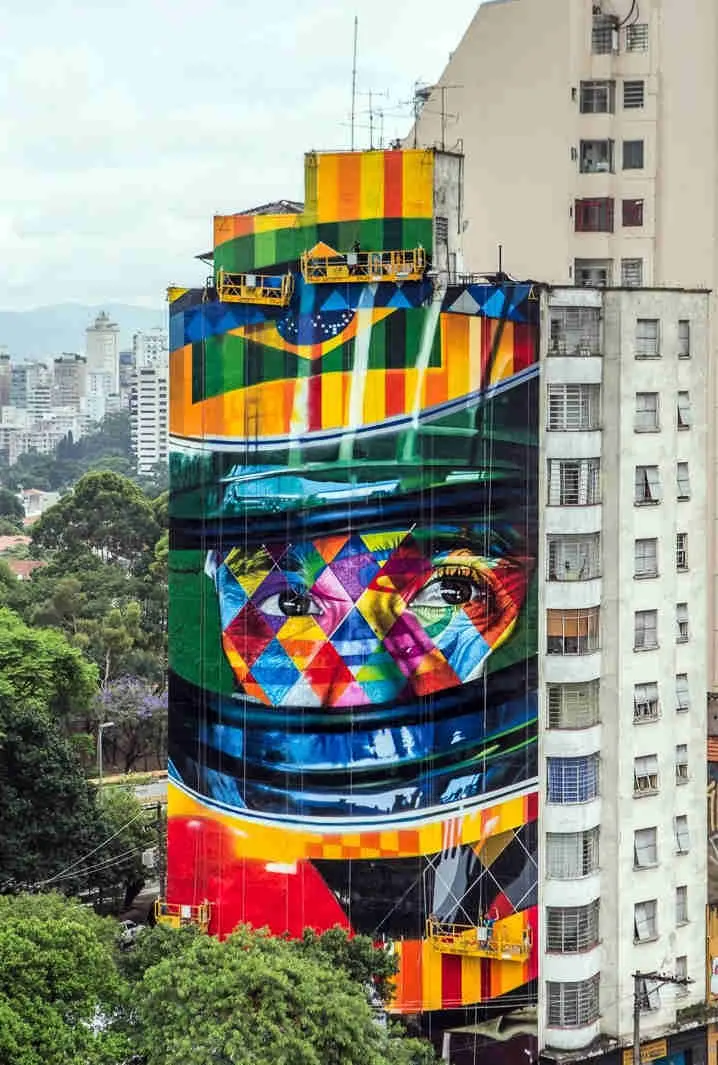
1. Eduardo Kobra
Kobra is certainly one of the most well-known artists when it comes to urban art and graffiti - and that is not only true of the tupiniquin lands, but for the whole world. He has painted panels on all five continents, but it is in São Paulo, his hometown, that he works more actively – to the point of making the city of São Paulo known internationally for its street art. He has two characteristics that stand out from other artists: first, his path from graffiti artist to graffiti artist and now, “muralist” – which is how he defines himself. Second, your style with geometric shapes and vibrant colors, unmistakable – you've probably seen a work of it, even without knowing your name.
2. Luis Bueno - The kissing skin
This is another image you have seen in graffiti in the streets of São Paulo – and that also won the world because it is urban art. The work is written by the designer and street artist Luís Bueno, who began the series to lick-lambes (a technique of printing and collage widely used in advertising billboards and posters) more than ten years ago. The inspiration came from a photo of Pelé embracing Muhammad Ali in 1977, in the United States: the artist realized the possibility of fitting several characters into the embrace of one of the greatest symbols of Brazilian culture.
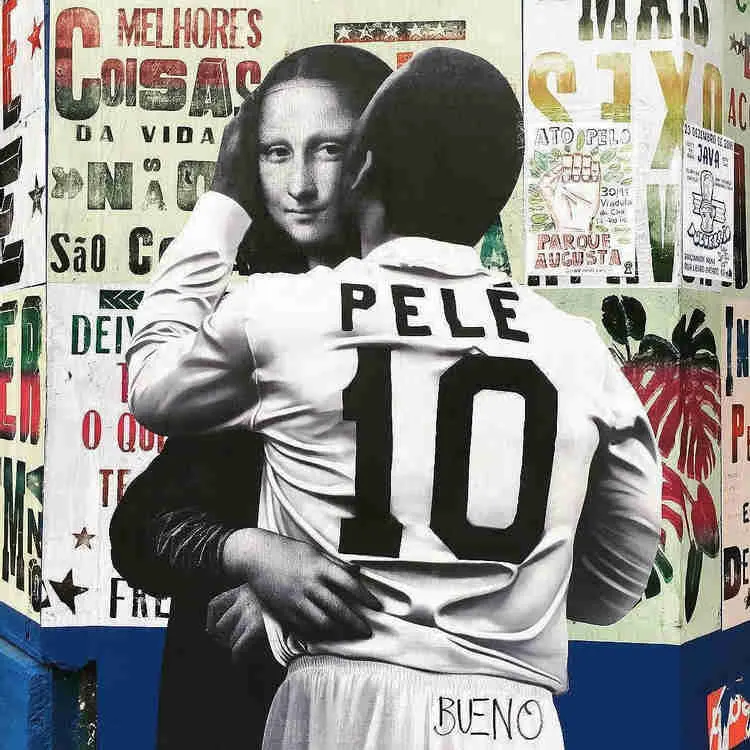
The success was so great that today the Pelé formula kissing someone is copied by many other artists – but this is just the balcony of street art: putting a work in public space, on the way halfway through people, for those who have never entered a museum also see a work of art. Fame (or anonymity) is just another detail.
3. Minhocon
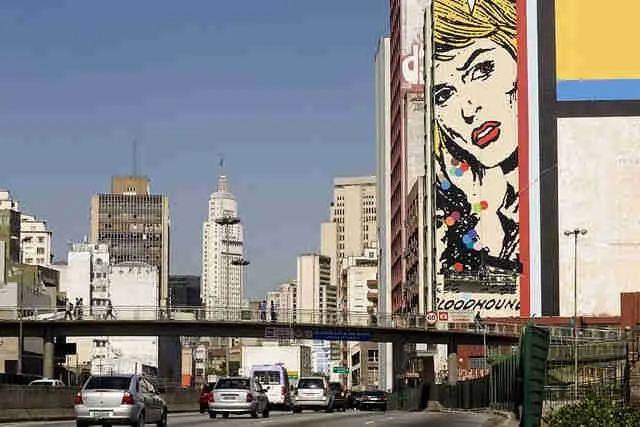
The Minhocão (officially the High President João Goulart) is the best example of the open museum of urban art in são paulo. It is a great example of how the spaces of downtown São Paulo are used in many ways by many different people and where graphite and urban art are highlighted. The 3 km expressway connects Roosevelt Square to White Water Park in Barra Funda, being an important East-West corridor of the city of São Paulo – in commercial hours. From 8 pm to 7 pm and weekends, the road is closed to cars and becomes an open-air cultural corridor, much like what happens to Avenida Paulista. The bottom of the structure serves as shelter for most of the city's street population – and also serves as a screen for many graffiti and lick-lambes.
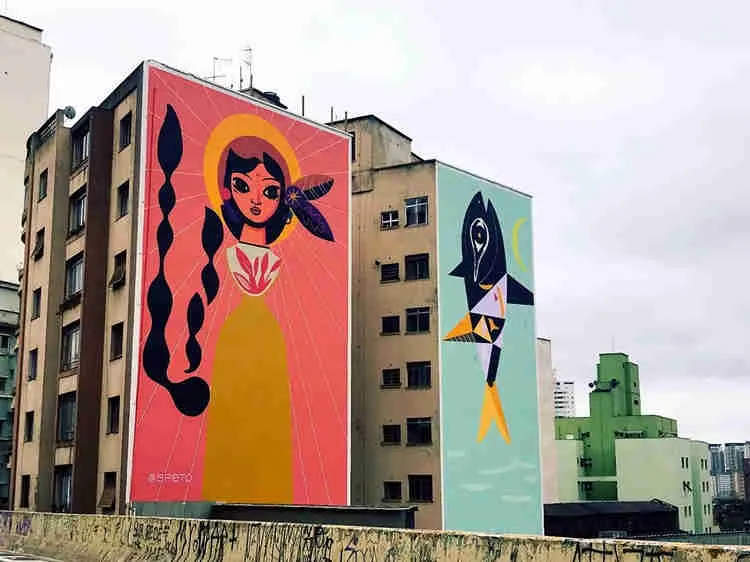
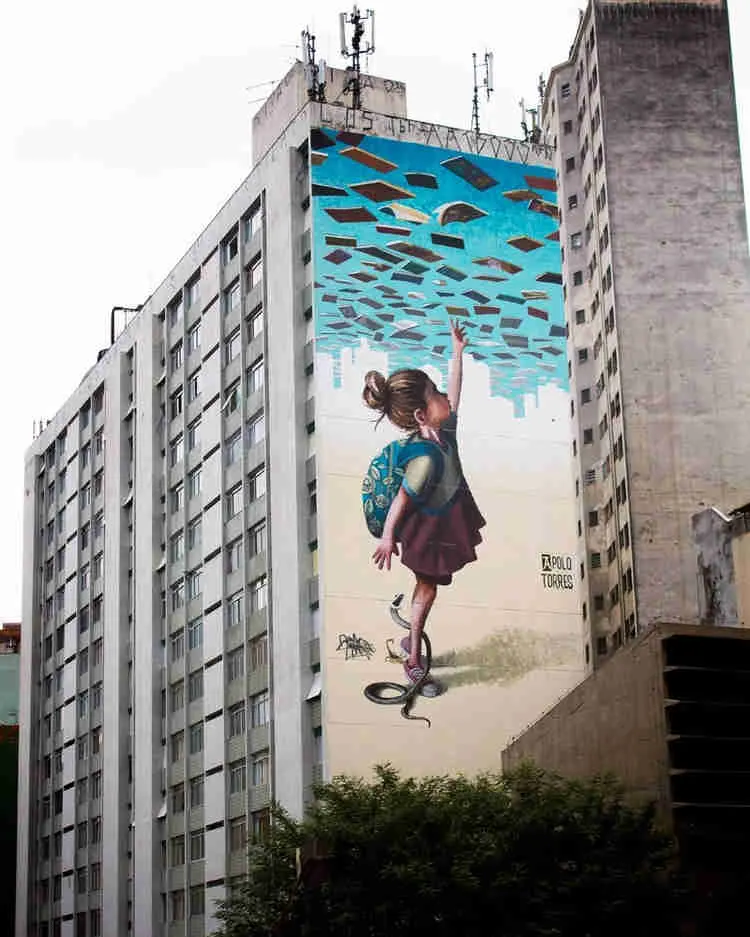
As street art is by ephemeral nature, many works come and go: some are erased by the action of time, others are painted so that other artists have space. Anyway, some graffiti murals stand out on the path of the worm: Nina, from graffiti artist Apollo Torres, can be seen right at the entrance of the high, in Roosevelt Square. The works of Felipe Morozini and Paulo Cesar Silva (known as Speto) also deserve to be highlighted – but the whole journey is permeated by murals of famous and anonymous artists, certainly worth a visit to weekends.
4. The Open Museum of Urban Art of São Paulo (MAAU-SP)
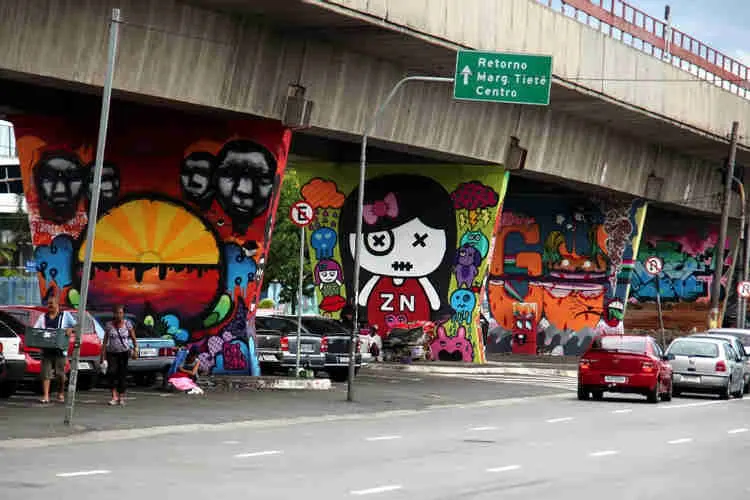
This is the first open museum of urban art in São Paulo and, according to the organizers, is also the first in the world. There are 66 graphite panels installed in the columns that support the subway tracks in Av. Cruzeiro do Sul, North Zone of São Paulo – a place considered the cradle of São Paulo graphite in the 1980s.
It all began when a group of eleven graffiti artists were arrested at the site for not having legal authorization from the SP Metro to paint the columns. At the police station, Binho Ribeiro and Chivitz (currently, curators of the MAAU-SP), drew up a project that was presented to the Secretariat of State for Culture and the president of the Metro. Months later, the project was approved and the Metro still provided the ink for the 58 participating artists to paint the urban art panels. The museum was inaugurated in 2011 and is still open for visitation, being an example of how street artists are sometimes treated as marginals for their work.
5. Avenida Senador Queirós – Mundano
Thiago Leite (known as Mundano) has been one of the main exponents of contemporary urban art in Brazil. The artist from São Paulo seeks to draw attention to political and environmental issues in graphite: he has an extremely attentive look at the social issues of a city like São Paulo and an extremely refined sense of humor, has had his works exhibited in several countries and has already given lectures even at the UN.
In 2012, the “Pimp my cart” movement began, where it graphs the recycling carts, in an attempt to rescue the self-esteem of these workers. From there to here, the work has already received help from more than 1900 volunteers in 39 cities and 8 countries. According to the artist: “If we paint all the carts of São Paulo we will open the world’s largest walking art exhibition, for a population that mostly does not attend museums or galleries.”
On Avenida Senador Queirós, near the Municipal Market, the artist recently painted a rereading of the painting “Os Os operarios” of Tarsila do Amaral in graphite – using the toxic mud of disaster in Brumadinho as ink.
6. Av. Prestes Maia - Daniel Melim
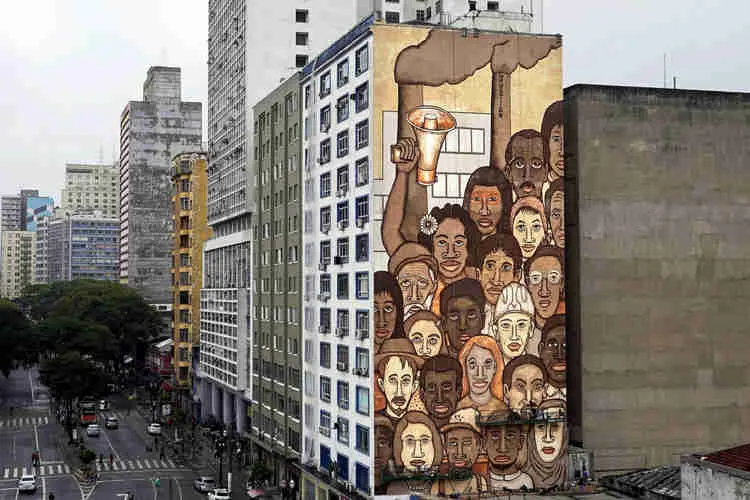
The mural of Daniel Melim became an icon of urban art in the city of São Paulo – those mandatory photos for everyone who is touristing around the city. The artist's graffiti bring several social clichés and stereotyped characters, forming a visual repertoire that dialogues with many of our cultural references and provoke interesting reflections.
It can be seen on Prestes Maia Avenue, opposite Pinacoteca: a place that, when it comes to cultural routes by São Paulo, must be on any list: the museum is considered the best cultural institution in the country.
Did you like this article on urban art and graffiti in SP? Do you have any suggestions we missed here? Tell us on social networks! InstagramWe always have news.
If you like this text, share it on social networks and continue your visit on our blog.
