

If we are going to talk about the greatest architects in Brazil, we must not forget the architect Francisco de Paula Ramos de Azevedo. He was of great importance to the brazilian architecture, most notably in the city of São Paulo, where he was responsible for the construction of the Municipal Theatre of SP.
Among several major projects, the Ramos de Azevedo office was the largest architectural office in the history of Brazil. In addition, the office is also highlighted because it is the architectural office to have the longest time in the market.
Want to know a little more about the life and work of this important architectJust read it to the end of the content we've prepared for you.
The Municipal Theatre of SP
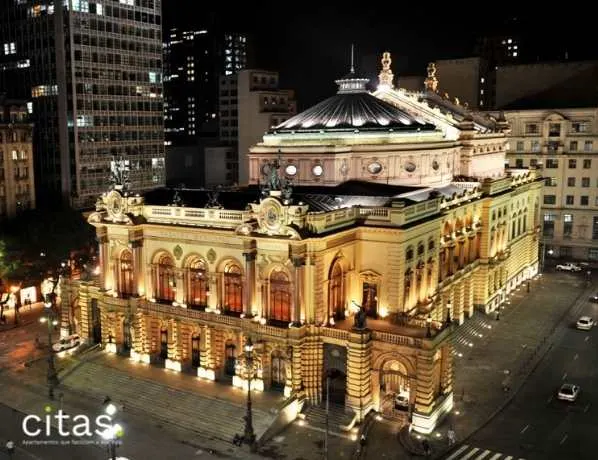
The idea for a new theater in the city of São Paulo came up with the need of the elite of the time. With the fire that destroyed the São José Theatre on February 15, 1898, the city of São Paulo was without a place for opera and theater performances.
Thus, a few days later, on February 22, an announcement was opened to define the creation of a new theater in the city. The mission was to build something grand, following the standards used in Europe and to accomplish this achievement, the famous architect Ramos de Azevedo was chosen.
The project was written by Ramos de Azevedo, who was helped during the whole process by Cláudio Rossi and Domiziano Rossi, two Italian architects. Together, the architects needed the project of the new theater to count on a coffee shop, a charutaria and a luxury restaurant.
In addition, the project needed to possess all the luxury and pomp seen in Europe's showhouses and in particular, France. Following the artistic movement of Belle Époque, the project for the new theater was initiated.
At the same time as the project of the theater itself was discussed, the great question arose: what is the perfect place to build the theater? Several known points of the city were discussed, among them the Plaza João Mendes, the Plaza da República and even the Largo San Francisco.
But with the expropriation of the area of Morro do Tea by the City Hall in 1903, it ended that the site was chosen and the works began in the same year. The work would not be finished until 8 years later, and the theater was officially inaugurated on September 12, 1911.
As there were no high buildings in the surrounding area at that time, such as the Martinelli building and the Sampaio Moreira building, the view of the beautiful theater was spectacular. Even if the artistic movement of the time was eclectic, the architecture of the theater uses patterns of the Baroque period, of the rebirth and also of the Art Nouveau.
In addition to all external appearance, the theatre impressed the population of the time by being the first building to use only electric power for lighting.
On the day of the official opening of the theater, excerpts from Carlos Gomes' book O Guarani were read, as well as Ambroise Thomas's opera Hamlet. Over time, it was noted that much of the performances in the theater were totally influenced by European fashion.
Some of the intellectuals of the time criticized this choice of the theater team to just show things from outside the country, demanding that Brazilian culture be shown. But this changed in Modern Art Week of 22, when Brazilian artists entered once and for all.
After the historical episode, the importance of Brazilian artists and art, which even influenced by international movements, has been demonstrated.
The Municipal Theatre we see today is the result of three reforms, one in 1954, one that lasted from 1986 to 1991 and the last one was made before the centenary in 2011.
The first, new floors were installed for the dressing rooms with the decrease of cabins, in addition to the installation of an organ. The second was made throughout the building, with installation of more modern equipment.
The third reform was made to commemorate the centenary of the theater on September 12, 2011. The reform was complete, with renovation of the stained glass windows, facade and the whole stage, using the best equipment found in the performing arts sector.
The Life of Ramos of Azevedo
Francisco de Paula Ramos de Azevedo was born in the city of São Paulo on December 8, 1851. As a young man, he moved to the city of Ghent, Belgium, where he began his studies to become an engineer.
However, they say that during his undergraduate degree, the director of the architecture course was so impressed with his drawings that he asked the young man to change courses. Thus, Ramos de Azevedo graduated in architecture and returned to Brazil, settling in the city of Campinas.
In Campinas, Ramos de Azevedo was responsible for the creation of the new cathedral of the city, the first of many notable works. Some years later, he was invited to design houses for the elite of São Paulo, and moved again to the city of São Paulo.
This is how the architecture office Ramos de Azevedo was founded, highlighted in the São Paulo scenario for several decades. With a reputation in growth after the Municipal Theatre project, Ramos de Azevedo participated in several other notable projects.
Among its main public works, we can mention:
- The Pinacoteca, which was inaugurated during the period of completion of the Municipal Theatre of SP, in 1905, the project had a team formed by Ramos de Azevedo and Domiziano Rossi;
- The Post Office Palace, with its inauguration in 1922;
- The Palace of Industries, which was a partnership with Italian Domiziano Rossi and Ricardo Severo. The project was completed in 1924;
-
The Municipal Market of São Paulo, which was inaugurated in 1933;
- Palace of Justice of São Paulo, inaugurated in 1933;
- The 1914 Pinacoteca Station;
- The Belvedere Trianon, which was built in 1916 at the site where the MASP is currently located.
There were several notable projects, with a large part of them being seen to this day in the city of São Paulo. Ramos de Azevedo died on June 1, 1928, at the age of 76, in Guarujá in São Paulo.
Now that you know a little more about the works and life of this remarkable architect, just make a script for the main works to know them all.
