

Here on Citas' blog, we've already done a post on Brazilian architecture in the center of São Paulo between the years 1900 to 1930 to show you how This region It's full of history and beauty.
Now, we are back to explain more about the construction of the region created in the 1940s to 1960s and the architects responsible for them.
So if you like architecture, history and, of course, from the SP center, keep reading our article to discover more outstanding locations and professionals for this region!
And before you talk about architecture, if you wonder why, even though it's a wonderful neighborhood, there's still so much Empty property in the center, we have a summation here
Architectural styles from 1940 to 1960
To better understand and admire the buildings of these decades, it is nice to know the styles that were used at the time. One of the most used by Brazilian architects between 1940 and 1960 was art deco.
It emerged in France and its name is an abbreviation of "arts décoratifs" (decorative arts) in reference to the International Exhibition of Modern Decorative and Industrial Arts that took place in Paris in 1925.
Some of its main features are: repetition of elements, symmetry, geometric lines and combination of materials. The Altino Arantes Building (Banespa Building), the Banco de São Paulo and the Viaduct of Tea are great examples of art deco constructions in the center of São Paulo.
Another style used at the time was the modernist, who broke with the traditions to create original works. Among its main features are simplicity, geometric shapes, integration of environments and the use of glass, steel and reinforced concrete.
Some examples of modernist buildings in the center of SP made between 1940 and 1960 are the Baron Building of Iguape and Copan.
Main architects of the time
Now, learn more about 5 of the main architects of the time who did beautiful works in the center of SP:
Pliny Amaral Bottle
Pliny Botelho do Amaral (1904-1993) was born in São Carlos and graduated from Mackenzie in São Paulo, where he did important works for architecture and for the city.
His most famous project is the Altino Arantes Building, 1947, which is known as the Banespa Building or Lighthouse Santander and is located in the center of São Paulo. Amaral was inspired by the Empire State of New York to make this building and for some time he was the largest in the city.
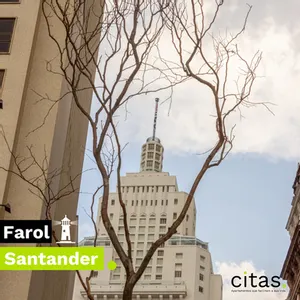
In 2021, he is the third largest and a great representative of art deco in São Paulo. After Plinio made the project, he also went through an adaptation of Camargo & Mesquita.
Rino Levi
Rino di Menotti Levi (1901 – 1965) was a São Pauloan who studied architecture at the Rome School of Architecture and, on his return to Brazil, became a great representative of the modernist style in the country.
In the centre of Sao Paulo, two of its largest modernist projects between the 1940s and 1960s were the building of the Hotel Excelsior and Cine Ipiranga, and the Concordia Building. Both are down by the Defense Council of Historical, Archaeological, Artistic and Tourist Heritage (Condephaat).
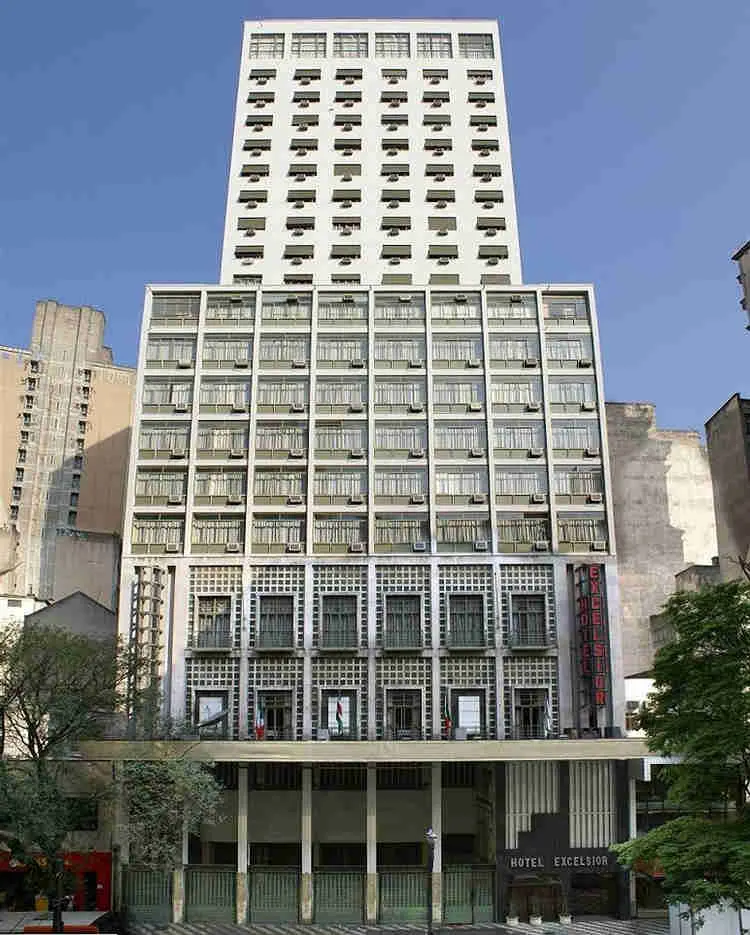
Levi's other important creations in the center of SP were the Columbus Building (demoled in 1971), the Art-Palácio Cine and the headquarters of the Institute of Architects of Brazil (IAB), the last one being held by a large team of architects.
Oscar Niemeyer
Oscar Niemeyer (1907-2012) is an architect who doesn't need many presentations, is he not? The professional from Rio de Janeiro, who graduated from the National School of Fine Arts in Rio de Janeiro, is one of the most well-known Brazilians around the world.
In the center of São Paulo, he designed several modernist buildings that embellish the city to this day. In the 1950s, he inaugurated his first building in São Paulo: the Montreal Building, which is a residential building marked by Di Cavalcanti panels at its entrance and the use of brises.
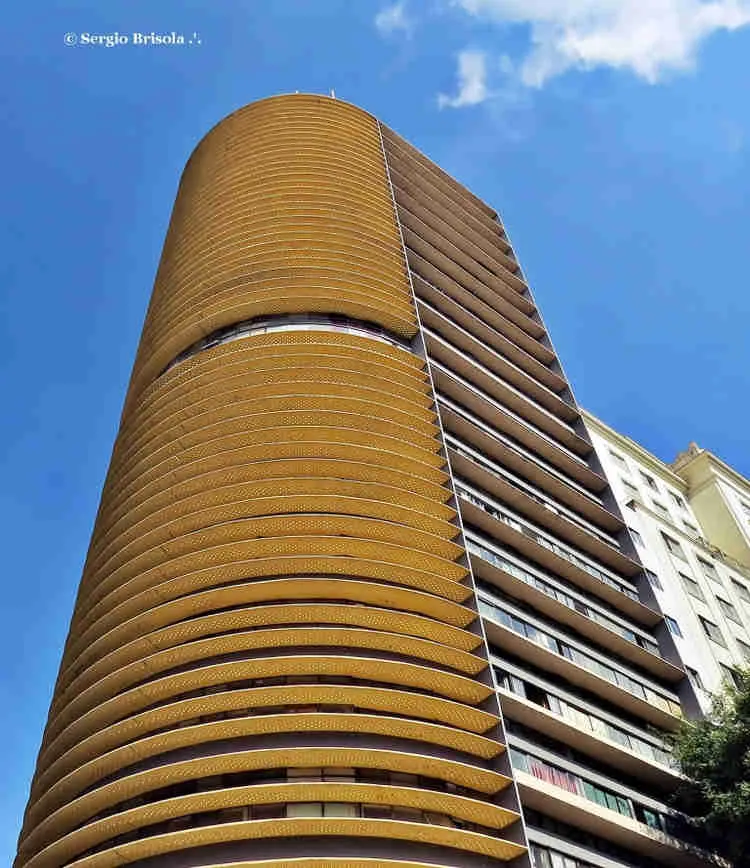
In addition to it, Nieyemer also designed the California Gallery, the Eiffel Building and the Triangle, which is named after precisely its shape. Copan, which is a postcard from São Paulo, is another creation of the architect in the city center.
The professional still has other important works spread throughout São Paulo, such as Ibirapuera Park, Sambódromo do Anhembi and the Latin American Memorial.
Álvaro Vital Brazil
Another important Brazilian architect from the time he graduated from the National School of Fine Arts was Álvaro Vital Brazil (1909 – 1997). São Paulo was also an engineer and made important buildings for the country in several states.
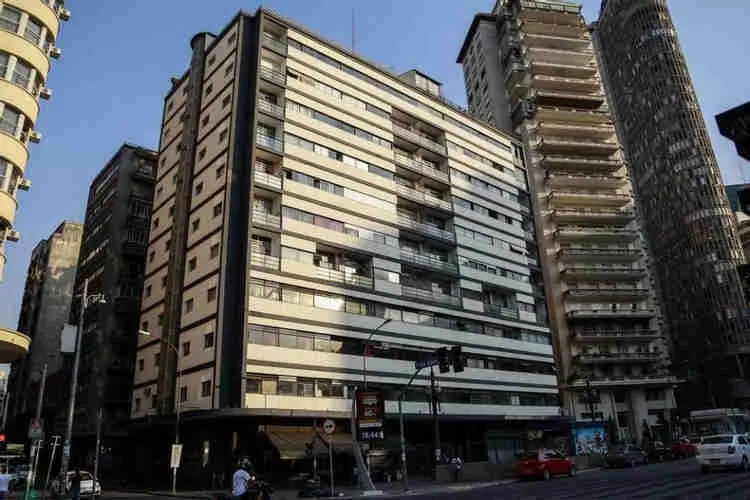
In downtown São Paulo, its main project was the Esther Building, created for the Esther Ltda Sugar Plant. use as a commercial, residential and office building. Although it was inaugurated in 1938, before the 1940s, it has modernist style.
Other important works by Álvaro Vital Brazil were Banco da Lavora de Minas Gerais in Belo Horizonte, the Brazilian Jockey Clube Building in Rio de Janeiro and the Vital Brazil Institute also in the Rio capital.
A curiosity: Álvaro Vital Brazil was the son of the doctor Vital Brazil Mineiro da Campaign, known worldwide for creating anti-oxidant serum.
John Artacho Juror
João Artacho Jurado (1907 – 1987) was one of the most controversial architects of the 1940s to 1960s. He shared opinions because he was not a graduate of architecture and the style of his projects.
These were full of colors, decorating items and mixed various styles, such as art deco, nouveau, modern and classic. Their residential buildings were innovative for providing leisure areas, swimming pools and roofs.
In the center of São Paulo, in the late 1950s, the architect and businessman of São Paulo was responsible for the project of the Bretagne Building. This is a residential building in “L” with pool, party hall, playground and even garden on the terrace. That is, super different from what was done at the time.
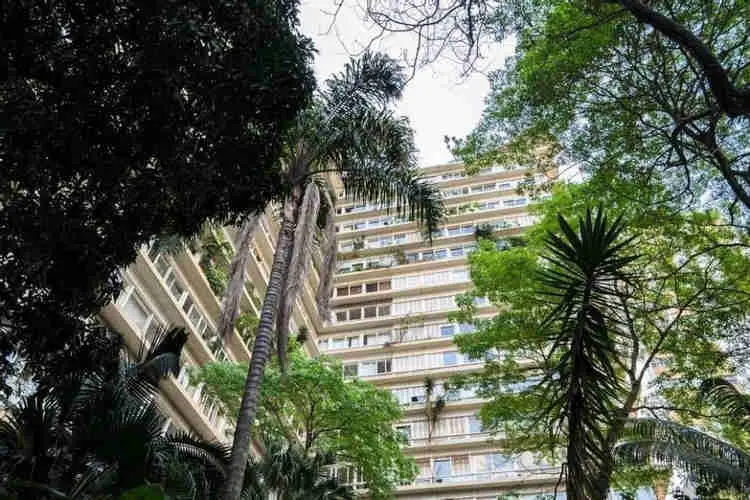
Other memorable projects of the professional in the center of São Paulo are the Piauí Building, Viaducts, Cinderella and the Park of the Acacias (now called APRACS).
The works of this period make it even clearer how the center of São Paulo is a rich and relevant place not only for the city, but for the history of architecture and the whole country.
So now that you know more about the architecture of this region, how about seeing others? advantages of living in the center of São Paulo?
