

Have you heard about the LEED certification, and especially, why several buildings are dedicating and seeking to conquer this seal?
Recognized internationally, this certification has become very popular especially in large cities due to increased concern in establishing Sustainable actions for the environment.
In practice, it is nothing more than a scoring system that certifies sustainable constructions, the famous “green buildings” that worry about being efficient and operating with a cost saving.
But winning it is not such a simple task.
The LEED certification has a very rigid classification system based on a number of criteria that need to be in order for a building to achieve this sustainability seal.
As difficult as it is, the benefits of obtaining this certification are several, both for the entrepreneurs themselves and for the tenants who will live on the spot. Do you know which?
In this text, we will explain everything you need to know about the LEED certification, as well as the criteria that are used for evaluation and, above all, the benefits of living in a building consecrated with this seal.
To help them, we separate the following topics that will be covered throughout the text. See:
● What is LEED Certification?
● How does it work?
● How important is LEED Certification?
● How to obtain LEED Certification?
Come on!
What is LEED Certification?
The LEED certification comes from the English term Leadership in Energy and Environmental Design. It is nothing more than a building-oriented environmental certification and guidance system.
Created in 1993 by U.S Green Building Council, has become internationally recognized for encouraging a more sustainable construction model, and today is present in more than 160 countries.
According to the organization itself, LEED has become the most used green building certification system in the world, by providing all the necessary structure to help the construction sector develop healthy, efficient and extremely economical green buildings.
In Brazil, these ideals began to be adopted in 2006. Since then, more and more buildings have been seeking to conquer this seal with innovative and highly sustainable buildings.
According to data released by GBC Brazil (Green Building Council Brazil), responsible for granting this seal according to the criteria established by the organization, in 2018 the country had 1,345 records, 533 certifications scattered in 25 Brazilian states and in the Federal District.
However, as we have said above, winning this certification is not an easy task. There are a number of criteria, standards and rules that are analyzed so that a building is considered sustainable.
Let's understand more about this in the next topic!
How does it work?
The LEED certification works through a scoring system. In other words, the building that is participating in the process must reach a minimum score required by the organization to win the sustainability seal.
In practice, a number of pre-established criteria are determined that function as a kind of checklist, all related to actions that contribute to the sustainability of the building.
As an example, its latest version released, called LEED v4, focuses on three classification items: the materials used in the construction and the impacts caused by its components; the performance of the building in relation to the quality of the internal environment for the tenant; and the efficiency of the use of water considering the general consumption by the building.
This is the general rule used by LEED, but before applying them, however, there are some standards that must be observed.
The first is that there are four LEED certification types and the building needs to fit into one of them according to the characteristics of the project.
Once defined, the sustainable strategies adopted by the site, i.e. the categories established by each typology, will be evaluated. Each of them has its prerequisites that must add a minimum amount of points for the building to be qualified to conquer its sustainability seal, taking into account the needs of each type of enterprise.
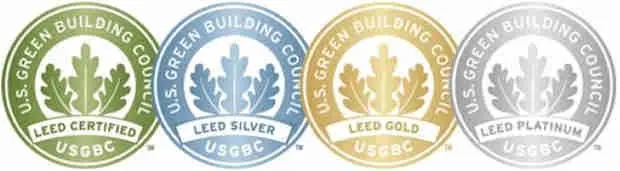
At the end, the amount of points achieved will determine which of the four LEED classification levels the building will gain: Certificate (Certified), Silver (Silver), Gold (Gold) or Platinum (Platinum).
It may sound confusing, but don't worry, because we'll explain each of these items in the next few topics.
What types of LEED certifications?
In short, there are four types of LEED certification: for Design and Building Construction; for Interior Design and Construction; for Operation and Maintenance of Existing Buildings; and for Neighborhood Development.
In each of them, several categories of sustainability assessment can still be applied, which we will explain in a moment. Rather, we will understand the differences between these types.
- LEED for Building Design and Construction (LEED BD+C)
This first type of certification is aimed at building buildings that want to achieve sustainability in a holistic way. In other words, they seek to maximize the concept of sustainability in the practice of construction, so that all the benefits of this practice are maximized.
It can be applied in various types of construction, such as in accommodation (hotels and inns); health units (hospitals); and buildings aimed at teaching (schools and universities).
2. LEED for Interior Design and Construction (ID+C)
The design and interior construction certification focuses on providing a better experience in indoor environments. Its goal is to improve people’s quality of life through sustainable elements that can be enjoyed in everyday life.
Some of the establishments that seek this typology most are retail and commercial stores.
3. LEED for Operation and Maintenance of Existing Buildings (LEED O+M)
This typology is focused on existing buildings, usually older and that consume a large amount of water and energy, for example. Its goal is to transform the way these buildings operate, so that they act more sustainablely.
It is widely used by sheds and distribution centers, for example, which store large quantities of goods or any other products. When applied, the scenario is usually completely changed dramatically, bringing great positive results.
4. LEED for Neighborhood Development (LEED ND)
Finally, LEED for the development of the neighborhood aims to encourage actions that integrate the concepts of sustainability and innovation.
Who has never walked the great avenues of Sao Paulo and met with the famous and huge gardens These are great examples of companies that have adhered to this typology, creating wide green spaces to improve the quality of life of their residents.
But besides, there are other famous actions that can be taken to conquer this seal, such as the use of LED lamps for generating low energy consumption, or creating water reuse systems to reduce spending and waste.
Once the building chooses the type of certification it wants to conquer, the second extremely important item for the operation of this seal are the scoring categories of this system.
Continue reading to find out what they are!
What categories are assessed in the LEED certification?
There are 7 categories evaluated by the LEED certifications, each of which brings together different technical and social points that are evaluated at the time of granting this seal.
These are: Location and Transport; Sustainable Space; Efficiency of water use; Energy and Atmosphere; Materials and Resources; Quality of the Internal Environment; and Innovation.
Let's see the characteristics of each of them:
- Sustainable Area
The first category evaluates the environment that involves the construction, that is, the characteristics of the building created in order to value and preserve the ecosystem and sustainability.
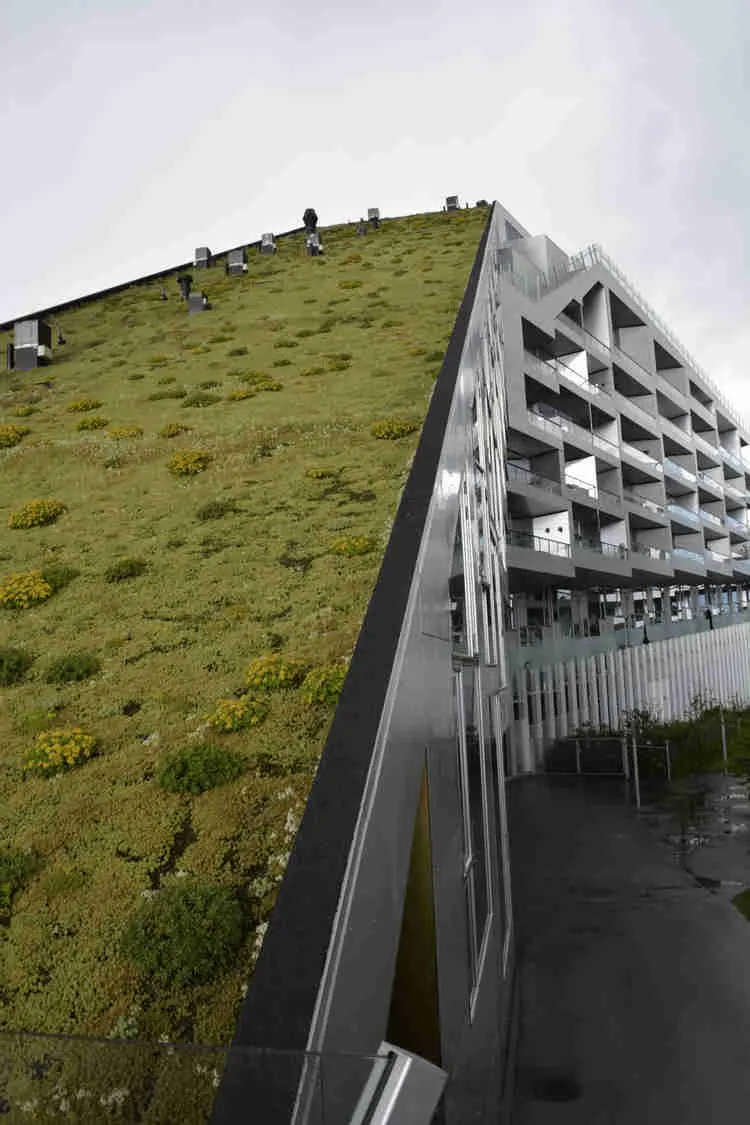
In practice, a building will have a good grade in this category if it is built based on ideals such as: preventing environmental pollution at the time it is built; reducing noise pollution; encouraging regional landscaping; and maximizing open spaces such as squares and terraces, for example.

2. Location and Transport
The category of location and transportation points to buildings built in easy-to-reach locations. In other words, they encourage alternative transportation and connection with public places such as restaurants and parks.
The main benefit of building a building that is easily accessible through public transport is to reduce the use of cars, which will consequently contribute to the air and air quality, with a reduction in pollution.
3. Efficiency of water use
The main principle of this category is “efficiency first” for water conservation and rationing.
Thus, the buildings that will have the highest score will be those that worry about the rational use of water in general, both internal and external.
For example, the use of cisterns to store rainwater can be reused for landscaping and cleaning the site.
4. Energy and Atmosphere
In this category, its main objective is to encourage the optimization and reduction of the use of energy by buildings.
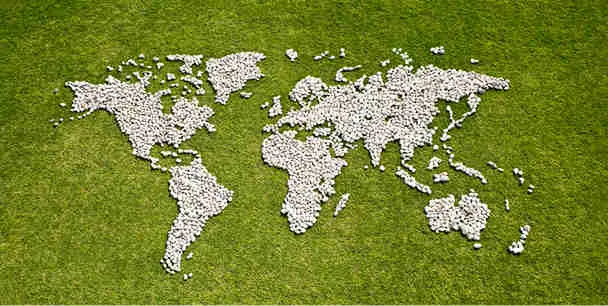
For this, there are several strategies that can be adopted, such as renewable sources through solar heaters; or even adopt large glazed areas instead of common walls, to ensure the use of sunlight.
5. Materials and Resources
Here, the most punctuated buildings will be those that worry about reducing the incorporated energy and other impacts associated with the extraction, processing, transport, maintenance and disposal or reuse of construction materials.
As an example, one of the most widely used practices in several buildings is the creation of a dedicated space for the storage of common and recyclable waste.
6. Quality of the Internal Environment
This category points out the buildings that were concerned with creating internal environments to provide good air quality and thermal, visual and acoustic comfort.
Some of the best practices that can be adopted to ensure a good score in this category are: decorating the environment with plants; presence of spaces with outdoor view and sunlight; banning smoking in and in areas near the entrance; and maintaining ventilation control.
7. Innovation
Finally, the category of innovation and regional priority points out buildings that use sustainable design strategies through new technologies, which will help to ensure a sustainable development of the environment. best performance of the whole building.
What is the importance of LEED Certification?
The LEED certification has several types and categories thoroughly evaluated to award a building with its seal. Even with so many criteria, we have increasingly seen the increase in the number of properties that seek to win this certification. Do you know why?
This certification is extremely important to encourage the construction of buildings that value sustainability, with strategies that contribute to the environment such as water reduction, energy and resources.
With a growing adherence of buildings with this certification, the entire construction sector will benefit, as they will also have a reduction in costs in its construction and maintenance.
But there are other fundamental points that justify the importance of this certification.
● Provides lower operating and maintenance costs, which consequently increases employee productivity and retention, as well as attracting a greater number of tenants;
● They use materials with components that cause less damage to the environment and to the health of the population;
● They are concerned with creating better and larger indoor spaces for tenants, generating greater comfort and quality of life;
● From a social point of view, it represents a building that cares about the awareness, safety and health of workers and tenants, ensuring greater satisfaction and well - being of all.
It cannot be denied that this certification brings several benefits not only to the owners of the buildings, but mainly to their occupants, both the employees and the tenants themselves.
So let's find out what it takes to get that certification.
How to obtain LEED Certification?
To get the LEED certification, there is a very specific step by step that every building should follow. See:
● Register the project
● Gather and submit all documentation
● Analysis and confirmation of prerequisites
● Certification
The first step to be taken is to register the project at the USGBC, a non-governmental organization responsible for granting this certification in Brazil. Created in 2007, it emerged with the aim of assisting in the development of the sustainable construction industry in the country.
This step is very simple, and can be done quickly through the Official LEED platform. For this purpose, it is necessary to gather all the general documents and information of the enterprise, which will be requested at the time of registration.
Once the material is sent, the organization will analyze the data and confirm that the project complies with all the prerequisites of the certification. Here, it will be evaluated which typology the building fits, and it complies with all the existing categories.
At the end, USGBC will disclose the total building grade and the level of certification obtained. If you do not agree with the result, the entrepreneur can appeal to the decision and ask for a new evaluation by paying a fee.
There are four classification levels according to the number of accumulated points, 40 being the minimum required to obtain certification, and a maximum of 110.
● Certificate: between 40 and 49 points;
● Silver: between 50 and 59 points:
● Gold: between 60 and 79 points:
● Platinum: 80 points or more.
Is there a cost?
The answer is yes.
To obtain this certification by USGBC, there are some required dollar rates that must be paid at the time of registration. Their values, however, will vary according to the need of each building.
The cost for the project registration, for example, can vary from $900 to $1,200. The value for the project analysis, in turn, is calculated per square meter, and can vary from $900 to $1,200 depending on the size of the space to be built.
Therefore, it is important to inform yourself about the values required for each stage of the certification process, so that you are not surprised at any extraordinary cost.
Conclusion
The LEED certification has been revolutionizing the construction sector in the country. Conquering its seal brings advantages not only to its entrepreneurs and tenants, but mainly to the environment and, consequently, the quality of life of the entire population.
So in this text we explain everything you need to know about this certification, as well as all the categories evaluated and how to register your building so that you can get this seal so important to encourage a more sustainable construction model in the country.
If you like this article, take a look at our blog and check out our other texts!
